Determining Beta-Glucan Content: A Comparative Overview of the Megazyme, Congo Red, and Total Glucan Assays
The laboratory method used to measure the beta-glucan percentage on a COA (Certificate of Analysis) directly affects the result. This guide explains method comparison and how to read the data correctly.
— HOOK —
Two manufacturers publish a COA. One reports 42% beta-glucan. The other reports 18% beta-glucan. The first product costs nearly twice as much. Logically, it appears to be of higher quality.
But something is missing. The method of measurement. Because the assay technique used for beta-glucan quantification can shift the result by a factor of two to three.
Why the Method Matters
The term “beta-glucan” does not denote a single molecule; it refers to a class of glucose polymers linked by different bond types — β-1,3; β-1,4; β-1,6 — and displaying distinct branching architectures depending on the source (mushroom, oat, barley, yeast).
Every laboratory method captures these diverse forms in different proportions. Some methods count grain-derived β-1,4 glucan together with mushroom beta-glucan and inflate the result artificially.
Three Principal Methods
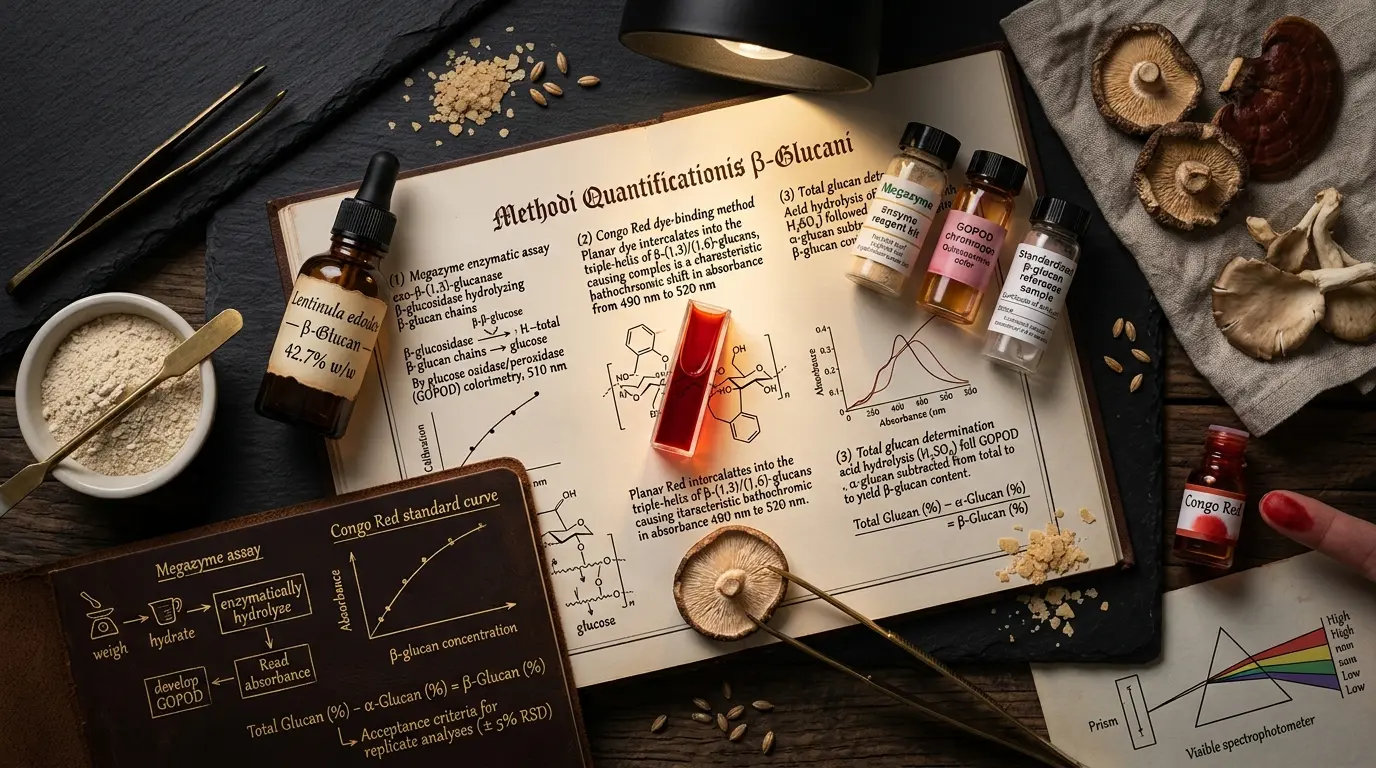
1. Megazyme (Mushroom and Yeast β-Glucan) Assay
Principle: Two enzymes — exo-1,3-β-glucanase and β-glucosidase — selectively cleave β-1,3 and β-1,6 glucans into glucose, which is then measured colorimetrically via glucose oxidase-peroxidase. Total glucan is corrected by subtracting α-glucan (starch); what remains is pure β-glucan.
Strength: Considered the gold standard for mushroom beta-glucan. It does not cross-react with cereal β-1,4 glucan. AOAC 995.16 and AOAC 2009.02 methods are built on this principle.
Weakness: Laboratory cost is high. Each sample requires a 2–3 day workflow.
How it appears on a COA: “β-glucan (Megazyme),” “AOAC 995.16,” or “Mushroom β-glucan assay.”
2. Congo Red Colorimetric Assay
Principle: Congo red dye binds to specific β-glucan conformations; absorbance is measured to estimate quantity.
Strength: Rapid, inexpensive, and widely available.
Weakness: Sensitive to branching structure — different species yield different binding responses. Considered insufficient for rigorous quantification. Used for screening purposes.
How it appears on a COA: “Congo red method” or “Colorimetric assay.”
3. Total Glucan Method (Total Glucan Assay)
Principle: All glucan polymers in the sample are hydrolyzed, and total glucose is measured. No distinction is made between alpha and beta forms.
Strength: Simple and delivers a high numerical value.
Weakness: Counts all glucans, including cereal starch. A grain-spawned mycelium powder can show “50% beta-glucan” by this method — yet the majority may be rice or barley starch.
How it appears on a COA: Terms such as “Total glucan” or “Polysaccharides (as glucan)” require careful scrutiny.
Essential Questions When Reading a COA
- Which method? Does it state “Megazyme” or “AOAC 2009.02”? Or merely “polysaccharide %”?
- Is alpha- and beta-glucan differentiated? The format “β-glucan 22%, α-glucan 3%” is ideal. “Total glucan 35%” alone is misleading.
- How was the sample prepared? Raw powder or extract? Extract naturally concentrates the value.
- Which batch? The batch number must match the packaging in hand. A generic COA is insufficient — every batch requires a specific analysis.
- Laboratory accreditation? Is it an independent third-party laboratory holding ISO 17025 accreditation?
Typical Beta-Glucan Percentages (Megazyme Method, Fruiting Body)
- Sparassis crispa: 35–45% (highest natural density)
- Maitake (Grifola frondosa): 20–35%
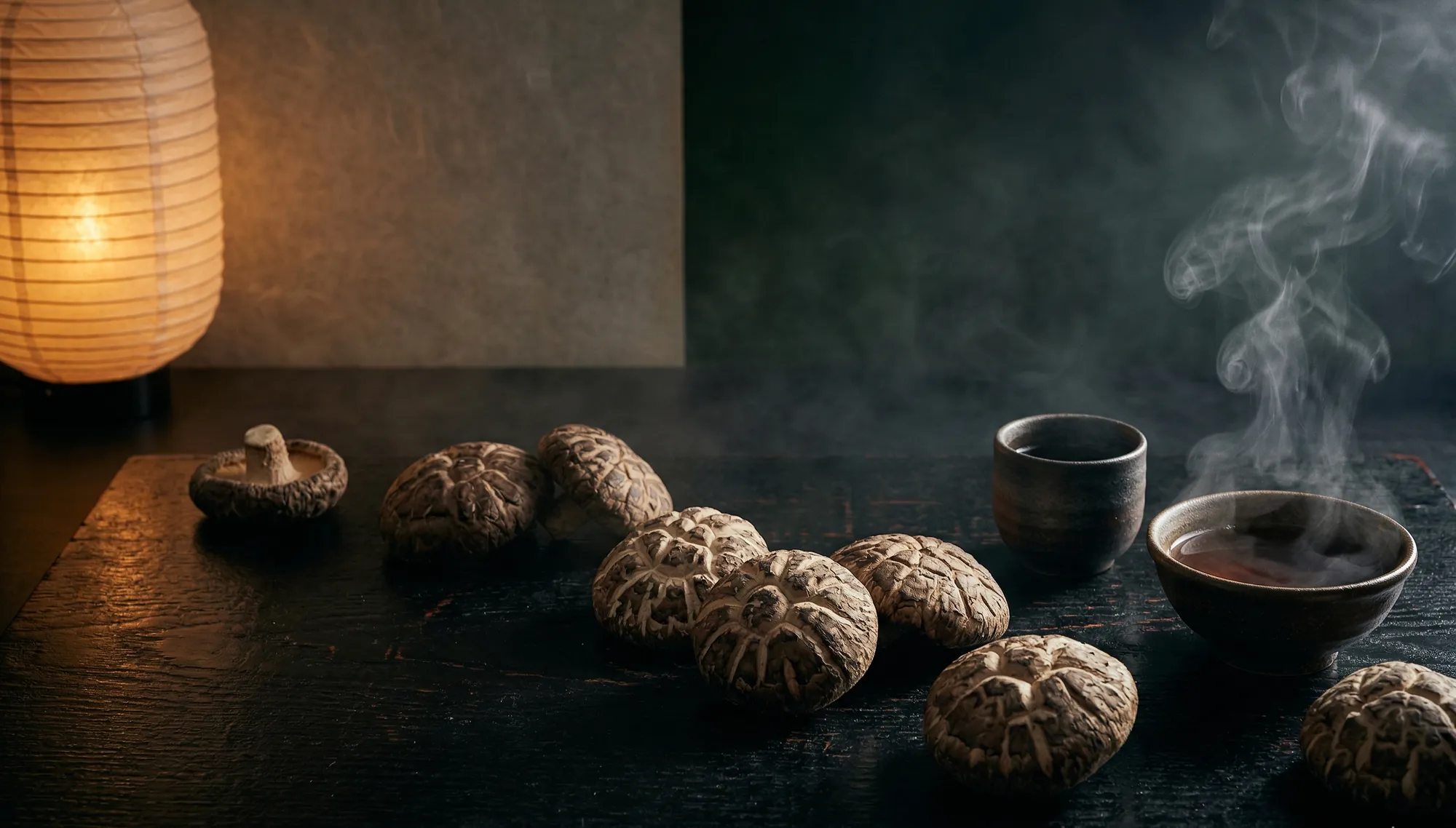
- Shiitake (Lentinula edodes): 15–30%
- Turkey Tail (Trametes versicolor): 20–35%
- Reishi (Ganoderma lucidum): 10–20% (triterpene-rich species; polysaccharide is secondary)
- Lion’s Mane (Hericium erinaceus): 15–25%
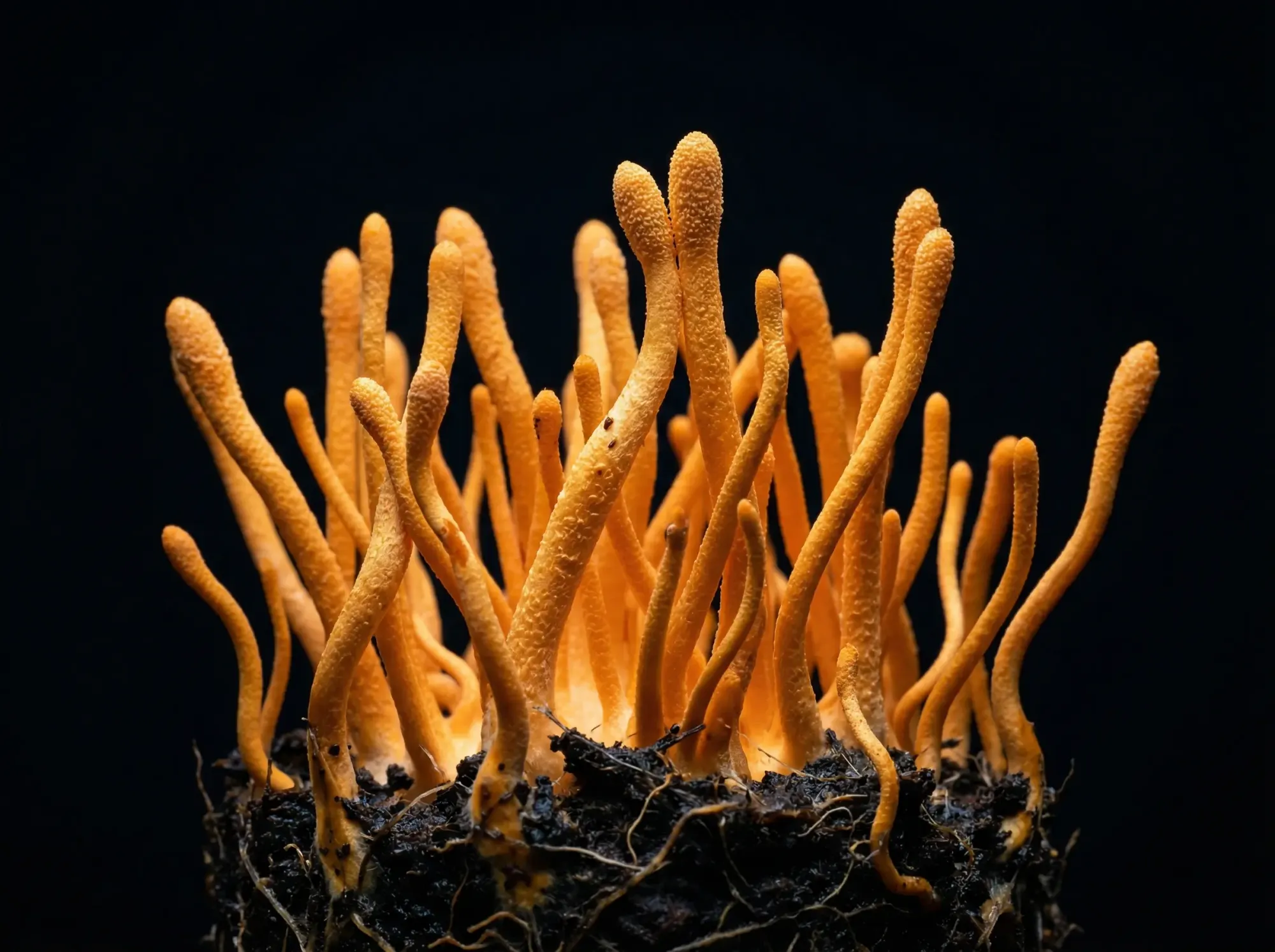
- Cordyceps militaris: 10–20%
In extract form these values increase two- to threefold.
Red Flags
- Fruiting body claims exceeding 50% beta-glucan: Either the wrong method was used (total glucan), or the material is an extract that is not declared on the label.
- COA without a stated method: Cannot be evaluated.
- COA lacking a batch number: Resembles general product promotion — it does not provide production-level assurance.
- Products labeled “Polysaccharides 70%”: Polysaccharide is not beta-glucan. Ambiguous terminology can mislead.
- Related reading: COA Reading Guide · What Is Beta-Glucan? · Mycelium vs. Fruiting Body
- Reference: Bibliography
- This content is for informational purposes only and does not constitute medical advice. Consult your physician before making any health decisions. Functional mushrooms are not drugs and cannot be used to treat diseases.
- Version: 1.0 | Last updated: 20 Apr 2026 | Sources reviewed: 6+ | Methodology: Editorial Policy | References: Bibliography