CR3 and β-Glucan Recognition: A Survey of the Complement Pathway Literature
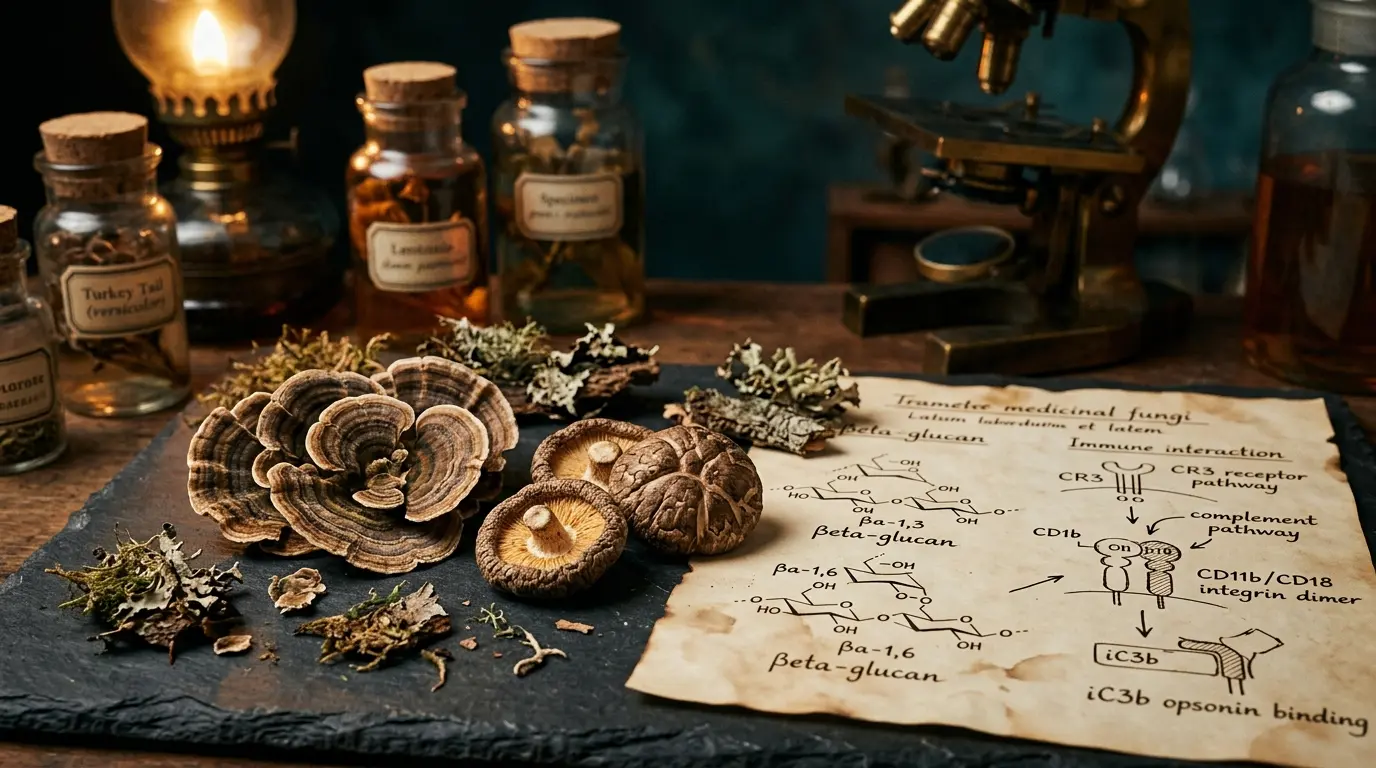
Beta-glucan recognition by the immune system is primarily attributed to Dectin-1. However, Dectin-1 is not the sole receptor for beta-glucans. Complement Receptor 3 (CR3) is a significant yet less frequently discussed actor in this interaction.
What Is CR3?
Complement Receptor 3 (CR3) is an integrin heterodimer composed of CD11b (αM) and CD18 (β2) subunits. Also designated Mac‑1 or αMβ2, CR3 is expressed on the surface of neutrophils, macrophages, and natural killer (NK) cells. Its canonical ligands include the complement fragment iC3b and fibrinogen, while beta‑glucan is classified as a secondary recognition ligand. The precise mechanism by which CR3 engages beta‑glucan remains debated: evidence supports both a direct binding mode and an indirect route reliant on complement opsonization (Thornton et al., 1996; PMID: 8601463).
CR3 and Dectin-1 Synergy
In macrophages stimulated with beta‑glucan, CR3 and Dectin-1 operate in a coordinated fashion. Dectin-1 signals through an ITAM‑like pathway, while CR3 activates an integrin signaling cascade; these two pathways produce mutually reinforcing effects. It is thought that both receptors must cooperate to enhance phagocytic efficiency, particularly when confronting large particulate beta‑glucan.
Complement Pathway and Fungal Interactions
Complement activation is a critical component of antifungal defense against fungal pathogens. There are data indicating that polysaccharides from Ganoderma and other medicinal mushrooms can modulate complement activation, though the clinical significance of this effect remains unresolved.
Related Readings
This page is prepared as part of the MYCOVITA Mycology Library. Intended for scientific reference; does not constitute medical advice. Source: mycovita.bio · Content Policy v1.0