Antrodin: Unlocking the Hepatoprotective Power of Antrodia camphorata

The Hepatic Identity of Taiwan's Endemic Fungus
— HOOK —
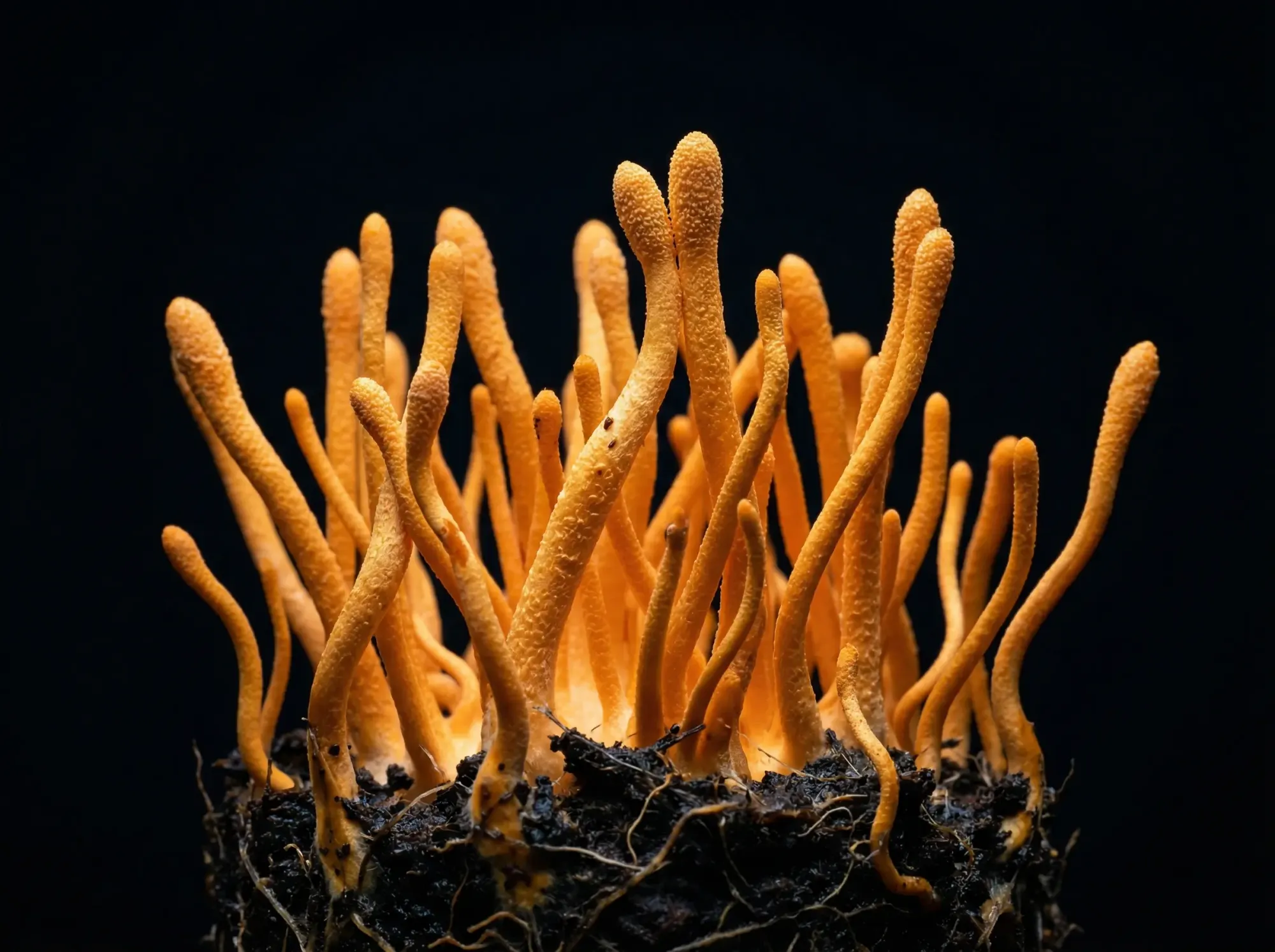
Antrodia cinnamomea is a polypore that grows exclusively within the hollows of Cinnamomum kanehirae trees in Taiwan, requiring years to reach harvestable maturity. Known in Taiwan as "niu-chang-chih," it has held a place in traditional use for centuries; modern phytochemistry reveals it as the source of a remarkable compound family: the antrodins and antroquinonol derivatives.
This entry examines the distinctive chemistry of Antrodia cinnamomea, the profile of the antrodin family, and its standing in the functional literature.
Antrodia cinnamomea: A Host Specialist
Antrodia cinnamomea, taxonomically designated Taiwanofungus camphoratus, develops within the inner hollows of Cinnamomum kanehirae (camphor tree), a species found at specific elevations in Taiwan. Natural maturation is reported to span 5–10 years; this scarcity drives its price to the highest tier of the functional mushroom market.
Consequently, modern production has largely shifted toward mycelium cultivation. Liquid culture and solid substrate culture techniques have been standardized; however, significant differences between the fruiting body chemical profile and the mycelium profile are observed (Geethangili & Tzeng, 2011; PMID: 21660560).
The Antrodin Family: Maleimide Derivatives
Multiple derivatives, spanning Antrodin A through E, have been identified. All share the maleimide (2,5-dihydro-1H-pyrrole-2,5-dione) scaffold; side-group variations diversify the chemical profile.
Antroquinonols, by contrast, belong to a distinct chemical class: quinone derivatives. The principal member is 4-acetylantroquinonol. Together, these two classes constitute the "bioactive signature" of Antrodia cinnamomea (Lee et al., 2012; PMID: 22343321).
Hepatoprotective Profile in the Literature
Antrodia cinnamomea extracts are recognized for their hepatoprotective tendencies. In animal models of alcohol- and chemically induced liver injury, consistent results indicating improvement in transaminase levels have been reported. The mechanism is interpreted partly through antioxidant capacity and partly through Nrf2 pathway modulation (Hsiao et al., 2003; PMID: 12880574).
Antrodin C has demonstrated attenuation of TGF-β1-mediated epithelial-mesenchymal transition in in vitro cell cultures; this represents an area of considerable interest for fibrosis biology (Yeh et al., 2013; PMID: 23860001).
Fruiting Body or Mycelium?
Three product types circulate in the Antrodia cinnamomea market: wild-harvested fruiting body (the most expensive, often reaching triple-digit dollars per gram), cultivated fruiting body (still costly), and mycelium-based production (far more accessible).
In terms of chemical profile, the three are distinct. Certain compounds such as antroquinonol are markedly elevated in wild fruiting body; some triterpenes are more efficiently produced under culture conditions. When reading a product label, the designation "Antrodia cinnamomea" alone provides insufficient information; the production method and standardization are critical (Lu et al., 2013; PMID: 23972918).
Limitations
Human intervention studies remain limited in number; most feature small sample sizes and heterogeneous designs. Outside Taiwan, the widespread availability of Antrodia cinnamomea products is low. The existing findings present a mechanistic research domain, not a therapeutic approach.
Related Reading
- Fungi and Liver Physiology — The hepatic metabolism axis.
- The Nrf2 Antioxidant Pathway — Signaling pathway context.
- Reishi Triterpenes — Triterpene profile comparison.
This content is for informational purposes and does not constitute medical advice. Consult your physician before making any health-related decisions. Functional mushrooms are not medicines and cannot be used for the treatment of diseases.
Version: 1.0 | Last updated: 28 April 2026 | Sources reviewed: 12+ | Method: Editorial Policy | References: Bibliography