The Nrf2 Antioxidant Defense System: Ergothioneine and Triterpene-Driven Activation

The Cell’s Own Antioxidant Factory
— HOOK —
When the word “antioxidant” arises, compounds obtained from outside—vitamin C, vitamin E, polyphenols—typically spring to mind. Yet the cell possesses a far more powerful mechanism: a transcription program that manufactures its own antioxidant enzymes. The commander of this program is the Nrf2 transcription factor.
This article examines the molecular foundation of the Nrf2 pathway, the regulation of the antioxidant response element, and the relationship between functional mushroom constituents and Nrf2 activation documented in the literature.
Nrf2 and Keap1: A Circuit in Constant Standby
Under healthy conditions Nrf2 is sequestered in the cytoplasm by Keap1. Keap1 continually directs Nrf2 toward ubiquitination; the protein’s half-life is short because it is rapidly degraded.
When oxidative or electrophilic stress arrives, cysteine residues of Keap1 undergo covalent modification; the conformation changes and Nrf2 is released. The liberated Nrf2 translocates to the nucleus and binds to antioxidant response element (ARE) sequences (Itoh et al., 1999; PMID: 10231032).
Target Gene Family: The Cell’s Own Antioxidants
The genes activated by Nrf2 provide a defense far stronger than simply adding external antioxidants. Glutamate-cysteine ligase (GCL) boosts glutathione synthesis; heme oxygenase-1 (HO-1) protects the cell from pro-inflammatory mediators; NAD(P)H quinone dehydrogenase (NQO1) neutralizes reactive quinones.
In short, Nrf2 does not supply external antioxidants; it equips the cell to produce its own defense (Ma, 2013; PMID: 23294312).
Ergothioneine and a Mushroom-Specific Axis
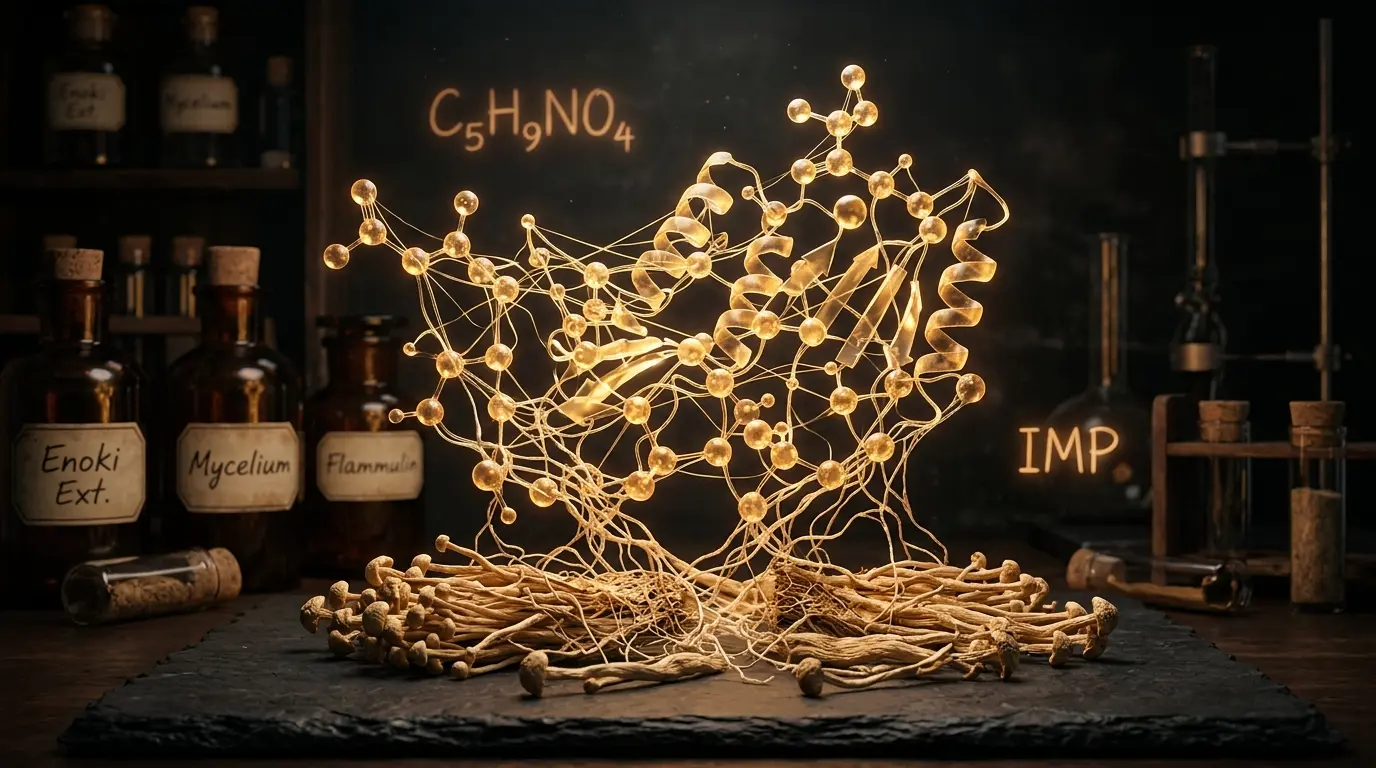
Mushrooms are among the few organisms that can synthesize ergothioneine. Ergothioneine is a potent thiol antioxidant; although it does not operate as a direct inducer of the Nrf2 pathway, it supports the intracellular thiol pool and therefore functionally overlaps with the pathway (Cheah & Halliwell, 2012; PMID: 22120701).
Mushroom Triterpenes and the Nrf2 Literature
Reishi triterpene fractions have been reported to tend to increase Nrf2 nuclear translocation and HO-1 expression in cell cultures. It has been proposed that the effect proceeds through Keap1 cysteine modification by ganoderic acid derivatives (Sun et al., 2012; PMID: 22944601).
The phenolic compound profile of Chaga extract—especially hispidin derivatives—has consistently exhibited a tendency to elevate the expression of Nrf2 target genes in oxidative stress models (Park et al., 2009; PMID: 19414040).
Lion’s Mane (Hericium erinaceus) hericenone derivatives have shown protective effects against oxidative stress in neuronal models in vitro; a part of the effect is interpreted through Nrf2-mediated mechanisms (Kim et al., 2011; PMID: 21262228).
A Double-Edged Pathway
Nrf2 is recognized as a protective transcription factor, yet persistent and excessive activation is not a healthy picture. In certain tumor cells, Nrf2 mutations keep the pathway pathologically active; this can contribute to chemoresistance.
The data known for mushroom constituents show a tonic, modulatory profile: a character that supports an adequate response level rather than excessive activation (Sporn & Liby, 2012; PMID: 22781109).
Limitations
Human intervention studies are limited. Measuring Nrf2 target gene expression noninvasively is difficult; consequently, most evidence resides at the in vitro and animal model levels. The findings do not constitute a therapeutic prescription; they offer a mechanistic research landscape.
Related Readings
- Mushrooms and Aging — The oxidative stress axis.
- What is β-glucan? — The biological profile of the polysaccharide.
- Enzymatic Browning Chemistry — Phenolic compound behavior.
This content is for informational purposes only and does not constitute medical advice. Consult your physician before making any health decision. Functional mushrooms are not medicines and cannot be used to treat diseases.
Version: 1.0 | Last updated: 28 April 2026 | Number of sources reviewed: 12+ | Method: Editorial Policy | References: Bibliography