The Definitive Guide to Maitake Mushrooms: Culinary Applications and Preparation Techniques
— TEXTURE AND DEPTH —
Some mushrooms bring texture to the kitchen. Some bring aroma. Maitake brings both — but what it truly brings is layering.
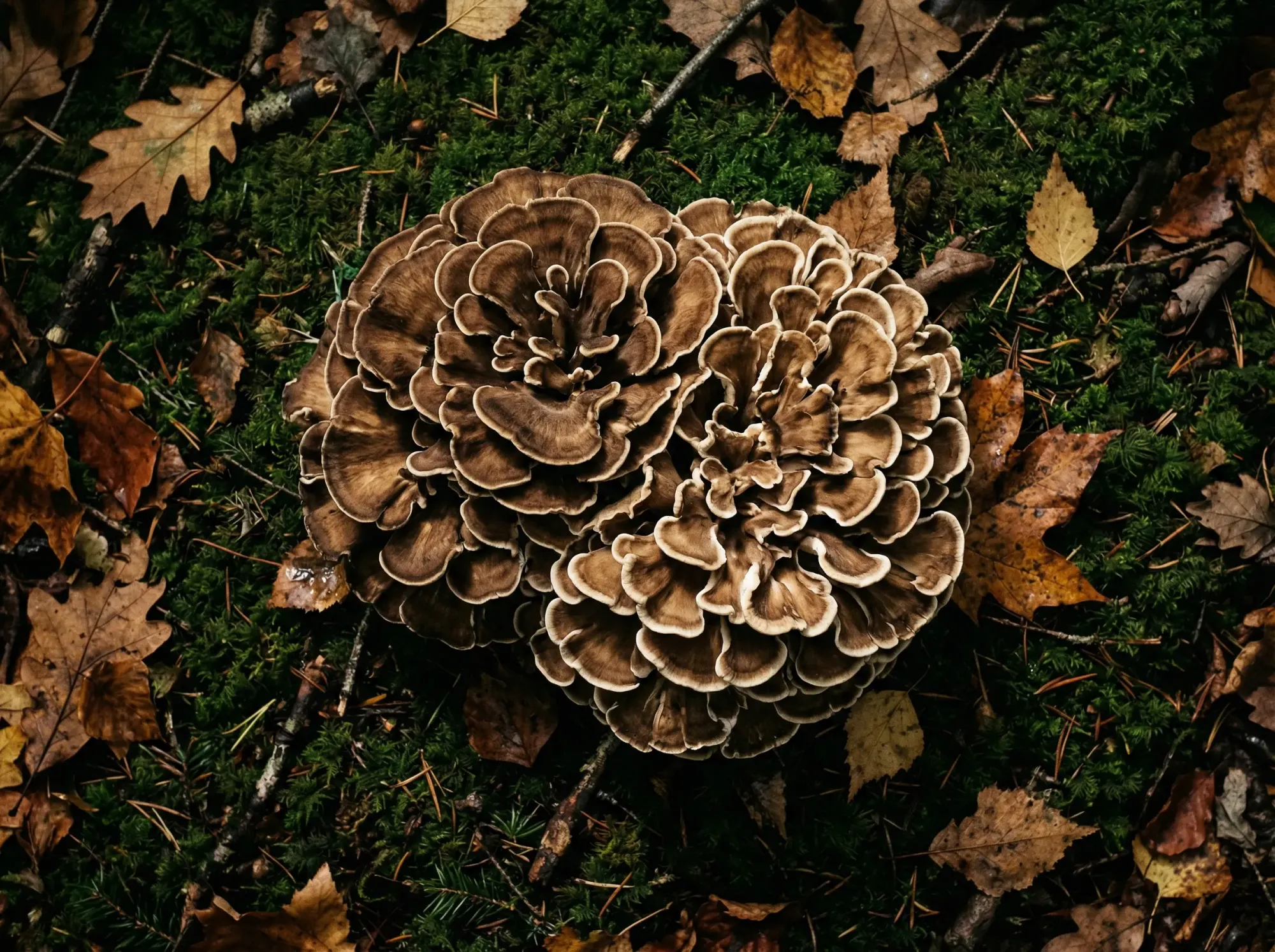
When you cook a single Maitake frond — that undulating, thin, leaf-like structure — in a dry pan, something remarkable occurs: the edges curl, turning golden, while the center remains tender. One bite delivers both crispness and silkiness. No other mushroom yields this texture.
— ORIGIN AND HISTORY —
Japan. Autumn. In the oak forests of the Tohoku region, a forager spots an enormous cluster at the base of a tree root. Nearly ten kilograms. He dances with joy — because finding Maitake, during the Edo period, was equivalent to finding silver.
Maitake's Japanese name is 舞茸 — the dancing mushroom. The name derives not from the one who named it, but from the reaction of the one who discovered it. This story is more than folklore — it is testament to how rare and how precious Maitake was.
Today it is cultivated under controlled conditions. Yet its culinary character remains unchanged. Still that layered architecture, still that forest aroma, still that umami depth.
— RECONSTITUTION — FROM DRIED TO FRESH —
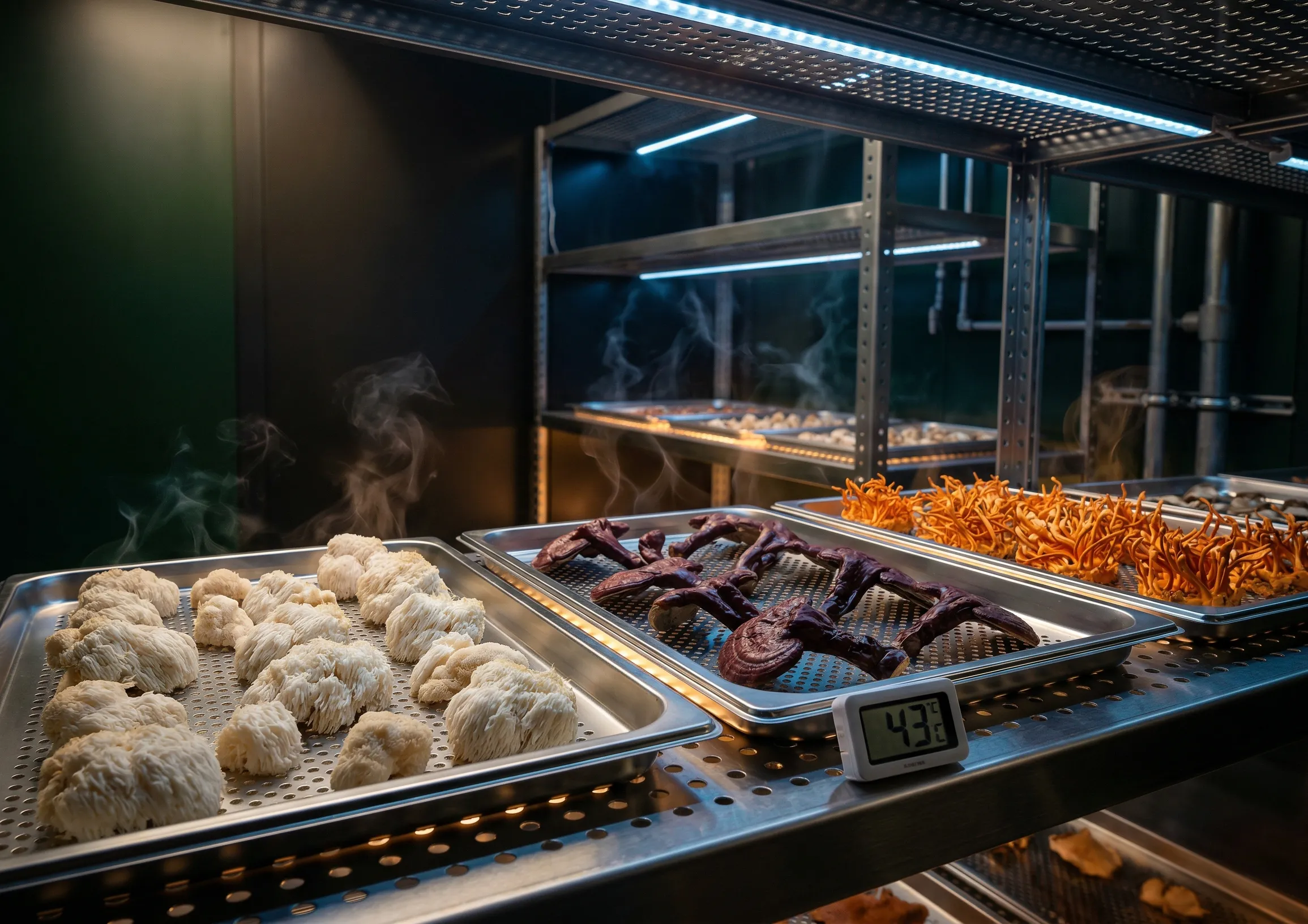
MYCOVITA Maitake is offered in whole dried form. Low-temperature drying at 42–45°C preserves the texture and aromatic profile. But proper reconstitution — soaking — is what translates that preservation into the kitchen.
Method: Submerge dried Maitake in warm water (35–40°C). Let stand for 20–30 minutes. Do not use hot water — rapid soaking softens the exterior while the interior structure remains tough. Warm water ensures homogeneous rehydration.
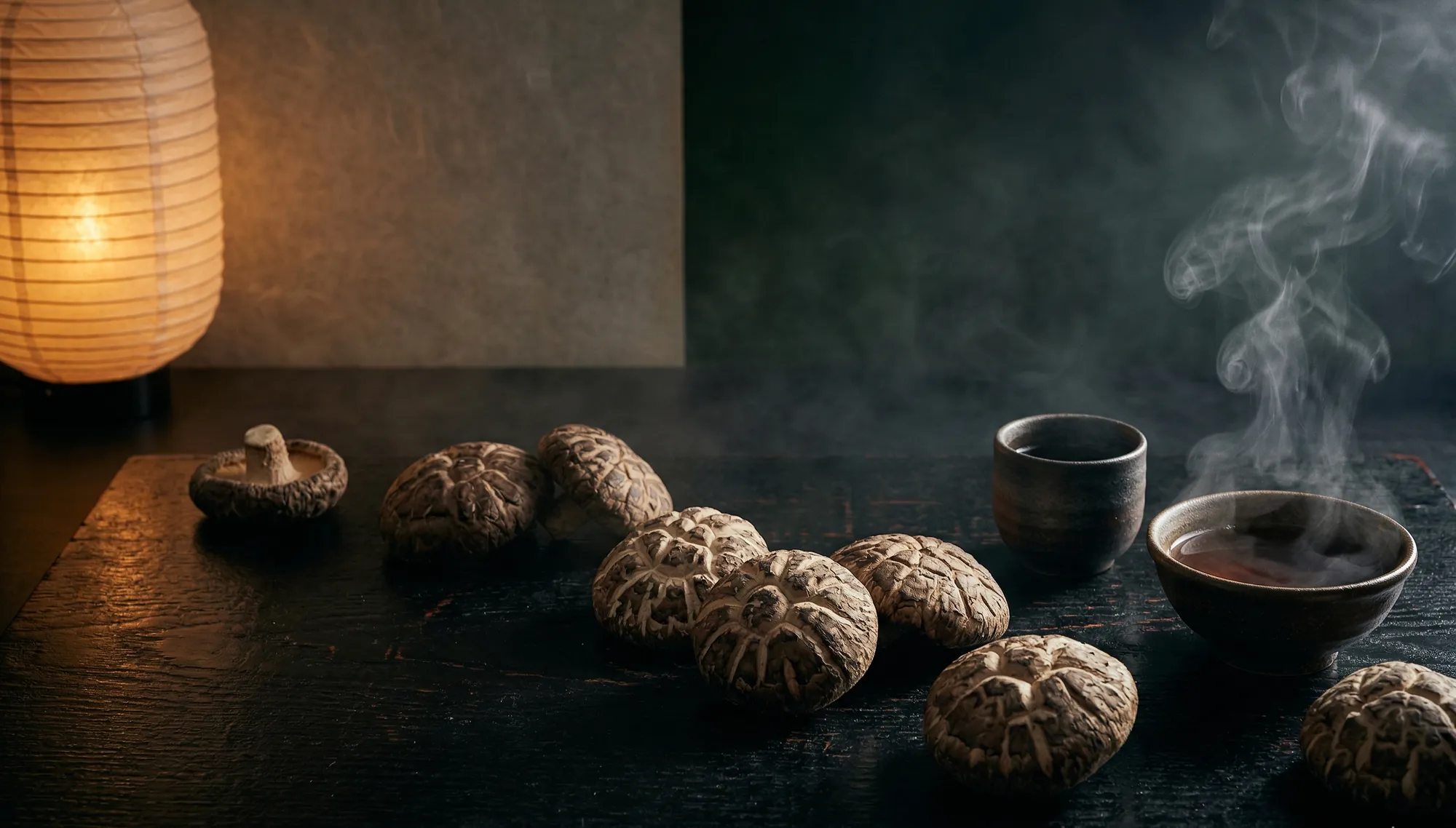
Critical rule: Do not discard the soaking water. This liquid — much like the modoshi-jiru of Shiitake Donko — is a concentrated umami base. Maitake's water-soluble beta-glucans and free amino acids transfer into this water. Use it as a sauce base, rice cooking liquid, or soup foundation.
— COOKING TECHNIQUES —
Maitake's culinary strength lies in its flexibility. Four fundamental techniques:
Dry pan — The Maillard technique: Pat soaked Maitake gently with a paper towel. Place in a dry, unoiled, hot pan. Do not touch. Wait 3–4 minutes. When the bottom surface is golden brown, flip. Salt only at the moment of serving. This technique yields crisp edges and a silken center.
Sauté: Butter or olive oil over medium heat for 5–6 minutes. Garlic is added in the final minute — any earlier and it will burn. Maitake's leaf-like structure absorbs oil, so use sparingly or it becomes heavy.
Stews and soups: Maitake can be added as whole fronds without breaking apart. Its texture holds throughout cooking — it does not dissolve or disappear. Add in the last 15 minutes.
Tempura: A classic of Japanese cuisine. Maitake fronds are coated in a thin tempura batter and fried at 170–180°C for 2–3 minutes. The interior retains its tenderness while the outer shell becomes crisp.
— FLAVOR PAIRINGS —
Maitake's earthy, forest-floor notes create synergy with specific ingredients:
Fat-based: Butter, hazelnut oil, sesame oil. Maitake's aromatic compounds are fat-soluble — a lipid medium enhances aroma transfer.
Acidic balance: Lemon juice, white wine vinegar, ponzu. Maitake's intense umami profile, when balanced with a mild acid, doubles in depth.
Protein: Chicken, fish, tofu. Maitake is not the primary protein — it is deployed alongside to add depth. In a vegan plate, it serves as the main ingredient, using its layered leaf form rather than scallop-like medallions.
Grains: Risotto, soba, udon. When Maitake's soaking water is added to rice or pasta cooking liquid, umami rises from the foundation.
— STORAGE —
Dried Maitake is stored at room temperature in a cool, dark cupboard. Do not refrigerate — condensation attracts moisture, causing the powder to clump. Once the package is opened, transfer the contents to a sealed glass jar.
Soaked Maitake can be stored in the refrigerator for 24 hours. However, same-day use is ideal.
Soaking water can be frozen — pour into ice cube trays and freeze. Each cube becomes a single portion of umami base.
— CHEF'S NOTE —
Maitake is the most underestimated mushroom in the kitchen. Most people regard it as "just another mushroom." They are mistaken.
When a Maitake frond is cooked correctly — in a dry pan, with patience, untouched — the resulting texture and aroma exist in no other mushroom. That layered leaf structure harbors a different degree of doneness in each stratum. The edge is crisp, the center tender, the stem attachment chewy. Three textures in a single bite.
Once you experience this, you will never underestimate Maitake again.
Related reading: Maitake Encyclopedia · What Is Umami? · Mushroom Dashi · Restaurant Chef's Notes
MYCOVITA's production philosophy and transparency principles: Why MYCOVITA?
MYCOVITA products are food products. They make no claim to treat, prevent, or cure any disease. If you have a health concern, consult your physician.
You May Also Be Interested In
→ Can Mushrooms Produced in Turkey Be Trusted?
→ Functional Mushroom Production in Turkey
This content is for informational purposes only and does not constitute medical advice. Consult your physician before making any health decisions. Functional mushrooms are not pharmaceuticals and cannot be used to treat diseases.
Version: 1.0 | Last updated: 20 Apr 2026 | Sources reviewed: 5+ | Methodology: Editorial Policy | References: Bibliography