NF-κB Signaling and Fungal Metabolites: A Review of Inflammatory Mechanisms
The Cell’s Alarm Switch
— THE HOOK —
When a cell encounters a pathogen, oxidative stress, cigarette smoke, or even an excess caloric load, a specific transcription factor translocates to the nucleus. It activates dozens of inflammatory genes simultaneously. This factor is the central node of modern inflammation biology: NF-κB.
This article examines the molecular foundations of the NF-κB pathway, its connection to chronic inflammation, and the place of functional mushroom constituents in the pathway literature.
NF-κB: A Five-Member Family
NF-κB is not a single protein; it is a family of five subunits: p50, p52, p65 (RelA), RelB, and c-Rel. These subunits form dimers; the most commonly active dimer is p50/p65. In the inactive state, it is sequestered in the cytoplasm bound to the inhibitor protein IκB.
Upon stimulation, the IκB kinase (IKK) complex phosphorylates IκB, tagging it for ubiquitin-mediated degradation. NF-κB is then liberated, translocates to the nucleus, and binds to promoter regions of target genes (Hayden & Ghosh, 2008; PMID: 18267068).
Canonical and Non-Canonical Pathways
NF-κB is activated through two pathways. The canonical pathway is rapid; cytokines, Toll-like receptor ligands, and oxidative stress act through this route. The non-canonical pathway is slower and directs developmental processes such as lymph node organogenesis and B cell maturation.
The distinction is important because “NF-κB inhibition” is not a uniform effect. Suppressing excessive canonical activation versus disrupting non-canonical developmental signaling yields different outcomes (Sun, 2017; PMID: 28580957).
Chronic Low-Grade Inflammation
In a healthy cell, NF-κB activation is brief. Once the pathogen is cleared, the pathway subsides. Under modern living conditions—chronic stress, high caloric intake, sedentary lifestyle, air pollution—NF-κB remains continuously activated at a low level. This chronic low-grade inflammation, termed “inflammaging,” is the common ground of age-related processes such as atherosclerosis, insulin resistance, and neurodegeneration (Franceschi & Campisi, 2014; PMID: 24833586).
Mushroom Components and NF-κB Literature
Reishi triterpene fractions have been reported to attenuate IKK activation and reduce p65 nuclear translocation in in vitro models. The effect is mediated not by a single compound but by a mixture of ganoderic acid derivatives (Dudhgaonkar et al., 2009; PMID: 19460320).
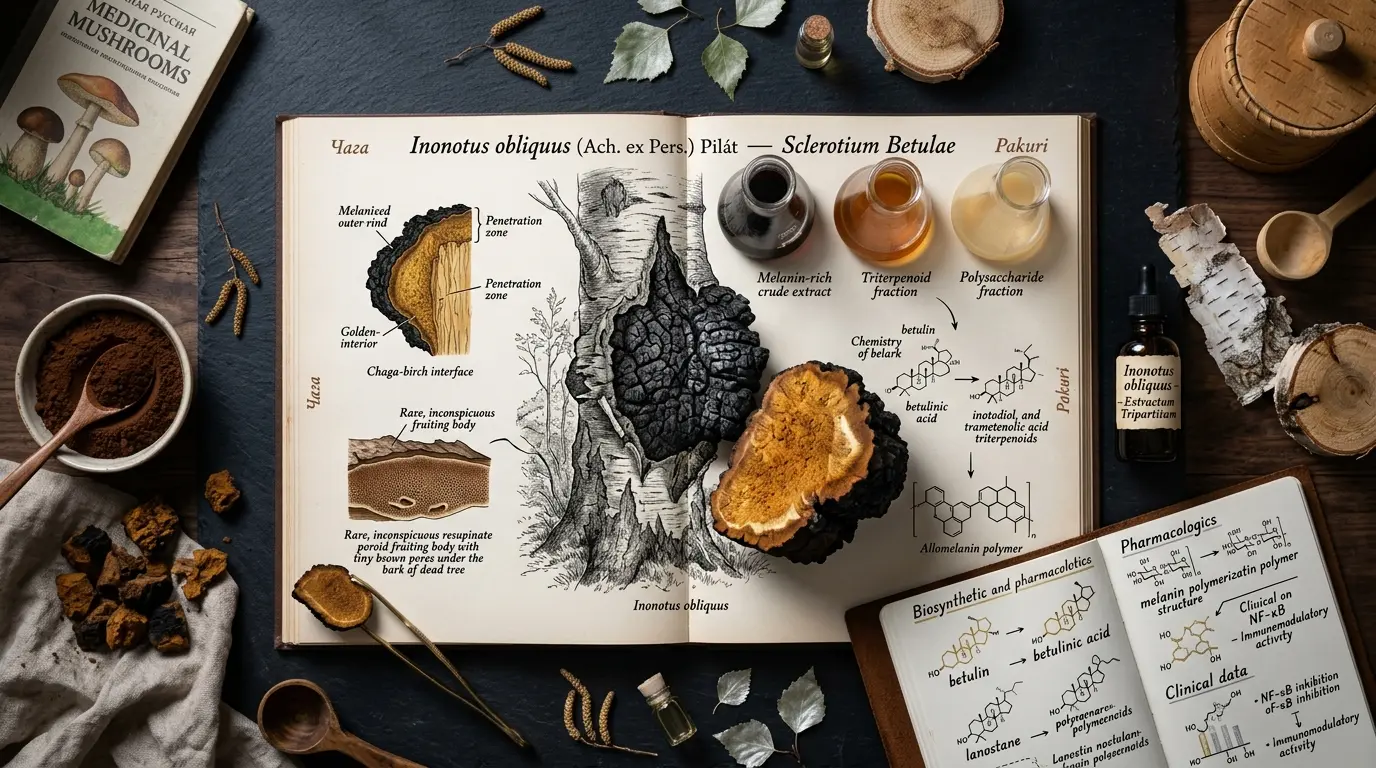
Chaga extract, with its phenolic compound profile, has shown a tendency to mitigate oxidative stress-induced NF-κB activation in animal models; hispidin and inotodiol derivatives are the prominent molecules (Park et al., 2005; PMID: 15722102).
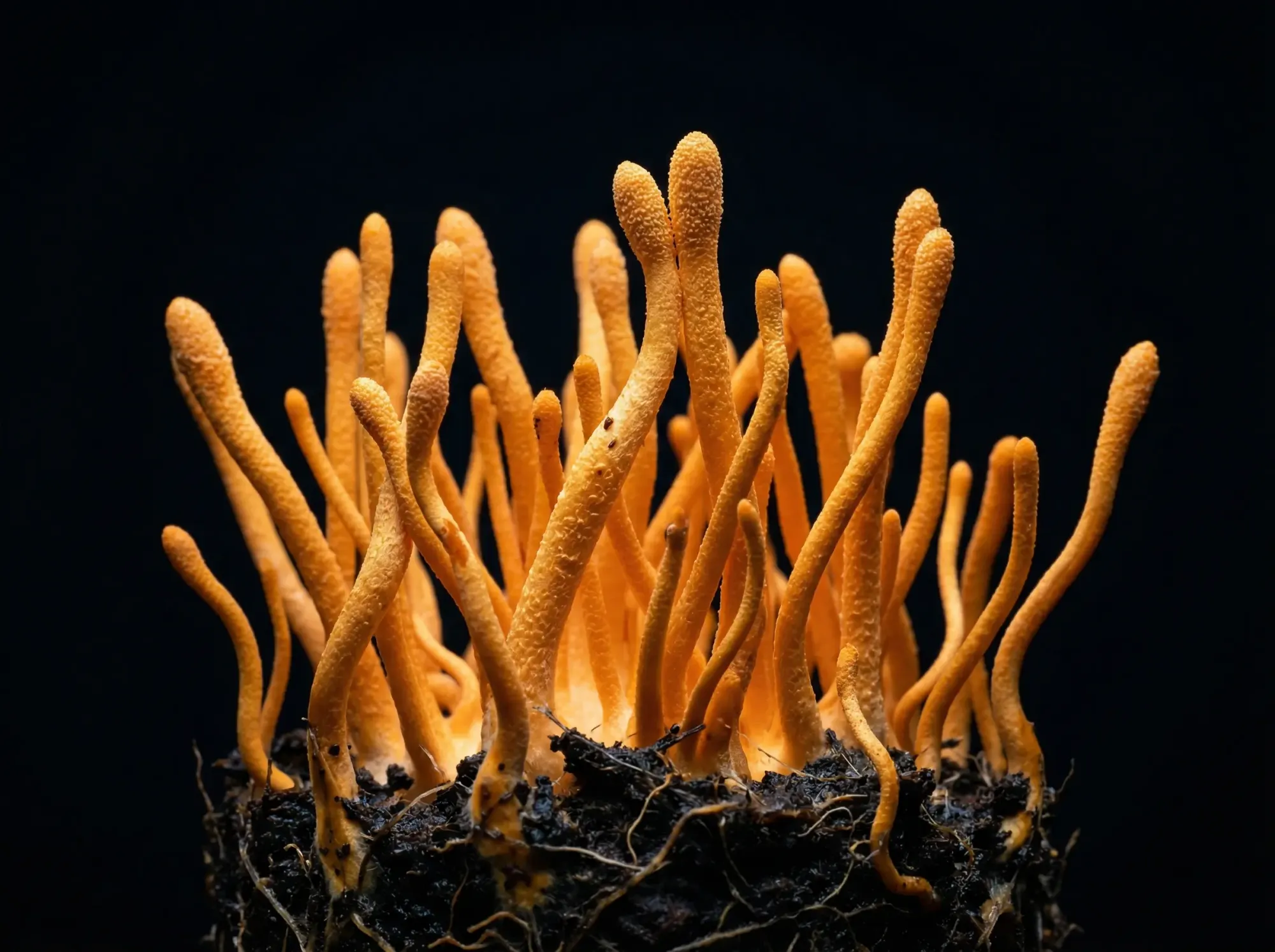
The cordycepin content of Cordyceps militaris has suppressed the expression of the NF-κB target genes COX-2 and iNOS in vitro (Kim et al., 2006; PMID: 16782295).
Dual Role: Over-Suppression Is Also a Risk
Complete silencing of NF-κB is not a healthy state either; this pathway is essential for the immune cell life cycle and cell survival. Therefore, the literature targets modulation of excessive activation—not its elimination. The in vitro effect of mushroom constituents aligns with this, characterized by attenuating highly stimulated activation (Karin & Greten, 2005; PMID: 15803151).
Limitations
Direct measurement of NF-κB activation in human clinical studies is difficult; most evidence is at the in vitro or animal model level. The findings present a mechanistic research domain, not a therapeutic approach.
Related Readings
- How Does the Immune System Work? — Inflammation architecture.
- Mushrooms and Autoimmunity — The orientation of immunity.
- What Is β-glucan? — Immunomodulatory profile.
This content is for informational purposes only and does not constitute medical advice. Consult your physician before making any health decisions. Functional mushrooms are not drugs and cannot be used to treat diseases.
Version: 1.0 | Last update: April 28, 2026 | Number of sources reviewed: 12+ | Method: Editorial Policy | References: Bibliography