Ganoderic Acid and the Source of Reishi’s Signature Bitterness
— HOOK —
You brewed your Reishi tea. Intense bitterness. You expected some bitterness, but this much?
Pause. That bitterness is not a flaw.
Ganoderic acid — the center of Reishi's bioactive identity — is an intensely bitter molecule. The more bitter, the more authentic. Sweet Reishi means weak Reishi.
— STORY —
The 1970s. Japan. As Reishi research began to systematize, investigators set out to separate the fruiting body into its constituent compounds.
Beta-glucans were already identified. Yet something else set Reishi apart from other mushrooms — its distinctive bitter profile. Where did this bitterness originate?
The answer: Triterpenoids. And the most prominent members of this class, unique to Ganoderma lucidum — the ganoderic acids.
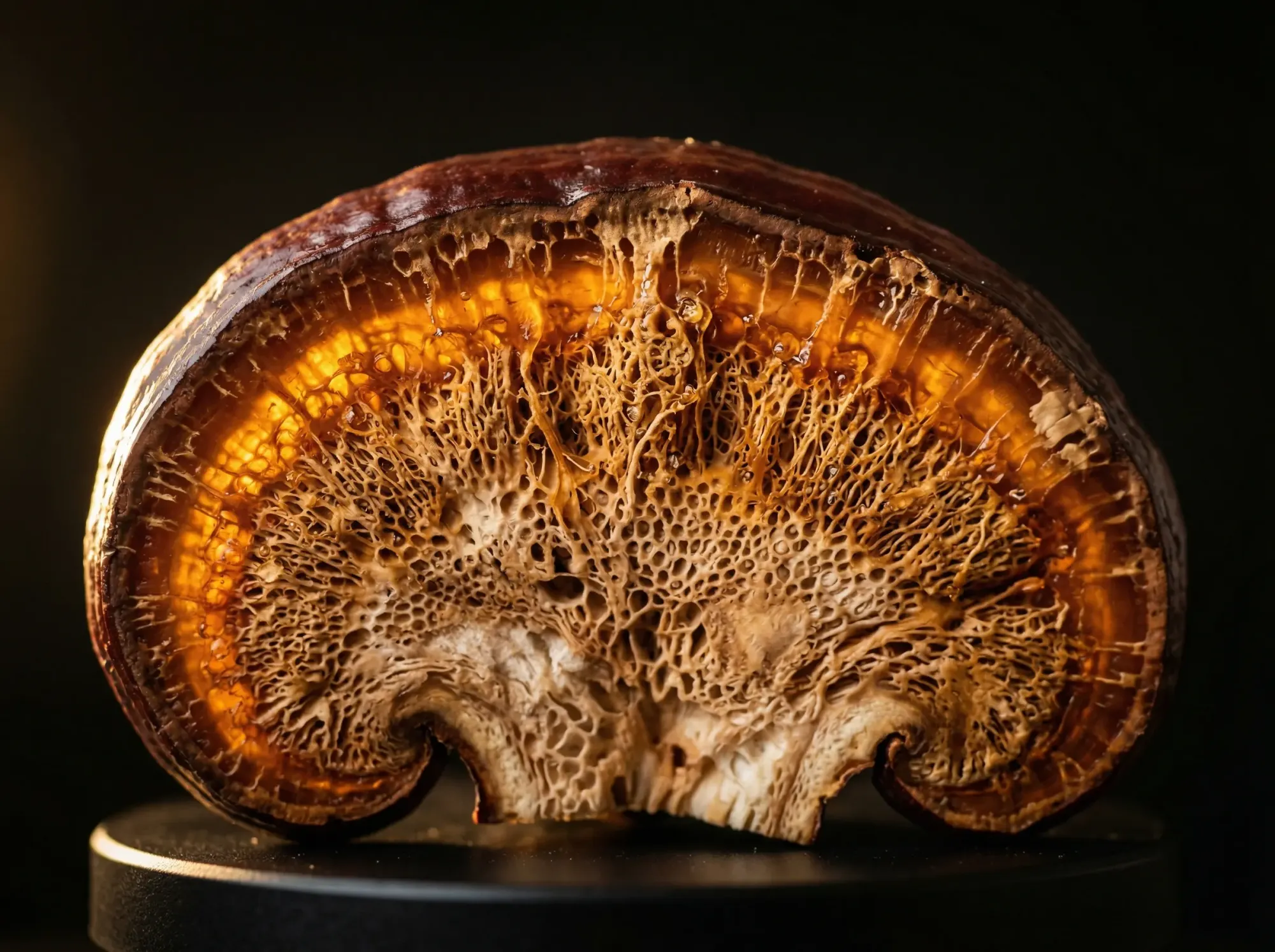
To date, more than 150 distinct ganoderic acids have been isolated. Each derives from the lanostane skeleton and represents a highly oxidized compound. All of them are bitter — this bitterness serves as a biological marker.
Reference: Boh, B. et al. (2007). Ganoderma lucidum and its pharmaceutically active compounds. Biotechnology Annual Review, 13, 265-301.
— WHAT IS GANODERIC ACID —
Ganoderic acids belong to the triterpenoid class of compounds. Triterpenoids occur throughout the plant kingdom — but the lanostane-type ganoderic acids specific to Ganoderma are the signature identity compounds of this genus.
Structural property: Fat-soluble — a critical characteristic. Water-soluble beta-glucans extract readily through standard brewing. Ganoderic acids require a fatty carrier to enhance bioavailability. Coconut milk, for this reason, pairs perfectly with Reishi brewing.
150+ distinct compounds: Ganoderma lucidum is among the rare species documented in the literature to contain more than 150 different ganoderic acids. This diversity implies a complex and broad bioactive profile.
— RESEARCH —
Adaptogenic Stress Response: The effects of ganoderic acids on the HPA axis — the central regulator of the stress response — are under active investigation. Cortisol regulation and potential modulatory influence on the nervous system sit on the current research agenda.
Sleep: The effects of Ganoderma lucidum extract on sleep cycles have been studied in mouse models.
Reference: Cui, X.Y. et al. (2012). Extract of Ganoderma lucidum prolongs sleep time in rats. Journal of Ethnopharmacology, 139(3), 796-800.
Liver: The effects of ganoderic acids on liver enzyme activity are under investigation.
Cardiovascular: HMG-CoA reductase inhibition — an effect on the cholesterol synthesis pathway analogous to the statin mechanism — has been reported for ganoderic acids.
Reference: Boh, B. et al. (2007). Biotechnology Annual Review, 13, 265-301.
— BITTERNESS AS A QUALITY INDICATOR —
The market offers Reishi products with a sweet or neutral taste. These contain low ganoderic acid levels — either they are not genuine Reishi, or the triterpenes were destroyed during processing.
Quality Reishi is bitter. The more intense the bitterness, the higher the triterpene concentration. This is not grounds for a consumer complaint; it is a built-in quality test.
As stated on the MYCOVITA Reishi label: "Noticeable bitterness upon initial tasting is normal and an expected characteristic."
— WHY THE ANTLER FORM —
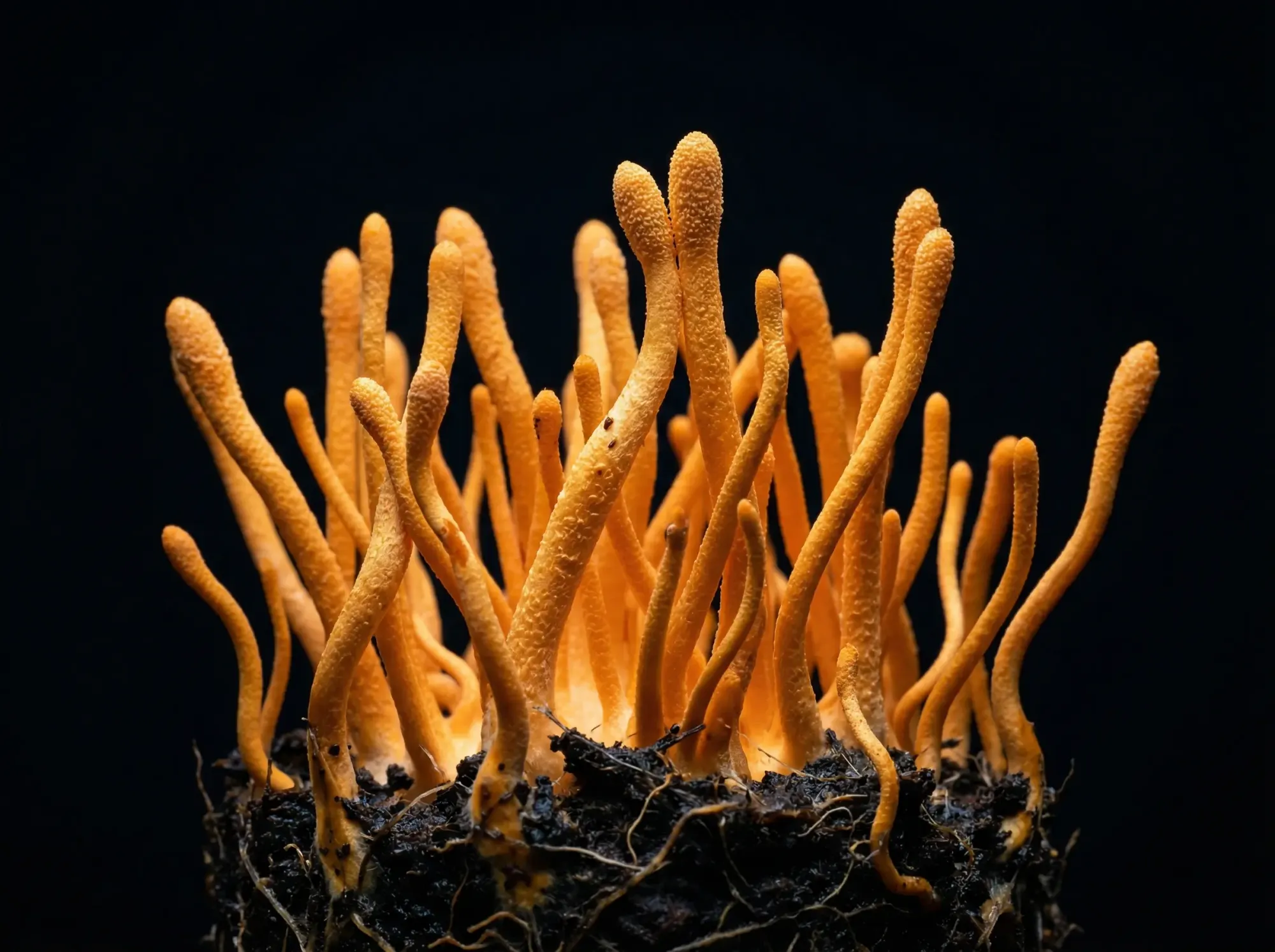
Standard Reishi develops a cap. In the antler form, grown under CO₂ control, the cap never opens — all metabolic energy channels into the stem tissue.
A 2018 study by Sudheer and colleagues: Ganoderic acid concentration in the antler form reaches up to 2 times higher compared to the standard form.
Reference: Sudheer, S. et al. (2018). Development of antler-type fruiting bodies of Ganoderma lucidum. Fungal Biology, 122(4), 293-301.
MYCOVITA favors the antler form for this reason — greater metabolic activity, denser triterpene accumulation.
— HOW TO USE —
Brewing: 1 g / 200 ml · 85–90 °C · 8–15 minutes · Extended brewing is essential for ganoderic acid extraction.
Carrier: Coconut milk — a fatty carrier enhances the bioavailability of fat-soluble triterpenes. Honey balances the bitterness.
Timing: Evening, 1–2 hours before bed. The adaptogenic profile suits the end of the day.
Duration: Research has predominantly examined cumulative use. Do not expect a single-dose effect — consistent, long-term use is key.
— CAUTION —
Individuals taking blood-thinning medications should consult their physician. Exercise caution before surgical procedures.
You May Also Like
→ Mushroom Science Glossary — 130+ Terms from A to Z
→ Can You Trust Mushrooms Grown in Turkey?
→ Functional Mushroom Production in Turkey
Related reading: Reishi Black Antler Encyclopedia · How Does Reishi Affect Sleep Quality?
MYCOVITA's production philosophy and transparency principles: Why MYCOVITA?
Mycelium Library | MYCOVITA
This content is for informational purposes only and does not constitute medical advice. Consult your physician before making any health-related decisions. Functional mushrooms are not drugs and cannot be used to treat diseases.
Version: 1.0 | Last updated: 20 Apr 2026 | Sources reviewed: 8+ | Method: Editorial Policy | References: Bibliography