Fungi and Hair Health: The Scientific Mechanisms Explained
— KEY QUESTION —
Hair loss ranks among the most searched health topics worldwide. Those pursuing "natural solutions" increasingly encounter medicinal mushrooms in their research. What does the scientific evidence actually say?
The short answer: the direct claim that mushrooms "stimulate hair growth" lacks scientific foundation. The indirect mechanisms, however, are worthy of attention.
— HAIR AND MUSHROOMS: INDIRECT MECHANISMS —
1. Ergothioneine and Oxidative Stress
The hair follicle is highly susceptible to oxidative stress. Ultraviolet radiation, environmental pollutants, and the aging process generate free radical accumulation within follicle cells. Ergothioneine — a unique antioxidant amino acid concentrated in mushrooms — undergoes active intracellular uptake in follicle cells via the OCTN1 transporter.
The theoretical connection: ergothioneine may reduce follicular oxidative stress → thereby supporting follicle health. This pathway, however, has not yet been clinically demonstrated in the context of hair growth.
2. NGF and the Hair Follicle
Nerve Growth Factor (NGF) functions not only in the brain but also within hair follicles. NGF signaling is active during the anagen (growth) phase of the follicular cycle. Hericium erinaceus (Lion's Mane) is well documented to stimulate NGF synthesis.
The theoretical connection: Lion's Mane → increased NGF → follicular cycle support. This cascade, however, has not yet been tested in vivo specifically within the context of hair growth.
3. The Stress-Hair Connection
Chronic stress is among the most common triggers of hair loss. Telogen effluvium — stress-induced shedding — is directly correlated with elevated cortisol levels. The adaptogenic properties of Ganoderma lucidum (Reishi) and its demonstrated capacity for cortisol modulation may offer indirect support in this context.
4. Immune Function and Alopecia
Alopecia areata is an autoimmune form of hair loss in which the immune system attacks its own hair follicles. The immunomodulatory effects of functional mushrooms are theoretically relevant here — yet in an autoimmune condition, immune stimulation may prove counterproductive. Caution is warranted.
— HONEST ASSESSMENT —
Direct clinical studies examining the effect of mushrooms on hair health do not exist.
The mechanisms outlined above represent theoretical connections — derived from in vitro data and general biological principles. The assertion that "mushrooms grow hair" is not supported by scientific evidence.
Mushrooms may offer indirect contributions within the broader context of general health, antioxidant protection, and stress management. However, individuals experiencing hair loss should seek dermatological consultation as a first-line priority.
— SPECIES OF POTENTIAL INTEREST —
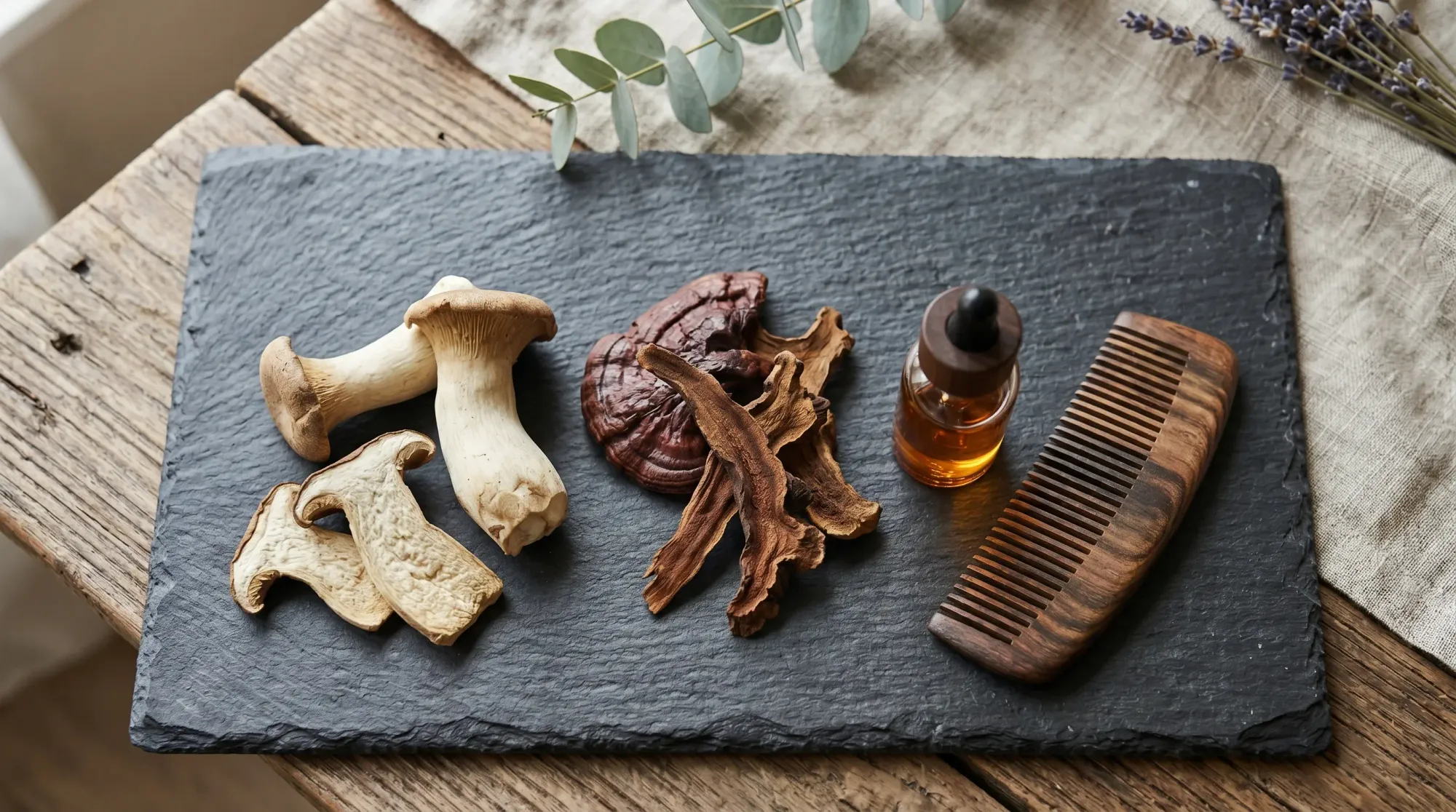
King Oyster / Shiitake: Richest dietary sources of ergothioneine → antioxidant protection
Lion's Mane: NGF support → theoretical contribution to the follicular cycle
Reishi: Stress modulation → potential reduction in telogen effluvium risk
Turkey Tail: Immune balance → exercise caution in autoimmune alopecia
You May Also Find Interesting
→ Mushrooms and Skin Health — Ergothioneine
→ What Is Ergothioneine? — The Longevity Amino Acid
→ What Is NGF? — Nerve Growth Factor
→ Stress, Cortisol, and Adaptogenic Mushrooms
→ Mushroom Allergies and Sensitivities
Related Reading
- Mushrooms and Aging: The Ergothioneine Literature — Ergothioneine Literature Review
- What Is Ergothioneine? The Science of the Longevity Amino Acid — What Is Ergothioneine and the Science of the Longevity Amino Acid
- Mushrooms and Skin Health: Ergothioneine Research — Mushrooms and Skin Health: Ergothioneine Research
This content is for informational purposes only and does not constitute medical advice. Consult your physician before making any health-related decisions. Functional mushrooms are not pharmaceutical drugs and cannot be used to treat diseases.
Version: 1.0 | Last updated: 20 Apr 2026 | References reviewed: 5+ | Methodology: Editorial Policy | References: Bibliography