Enoki (Flammulina velutipes): A Comprehensive Species Profile
The Modern Scientific Profile of Slender White Stems
— ANCHOR —
A supermarket bag filled with threadlike white mushrooms — long, slender stems, petite caps. Enoki holds a daily place in Asian cuisine, yet its weight in the functional mushroom literature exceeds what its delicate appearance suggests.
This entry examines the species profile, bioactive chemistry, and functional literature position of Flammulina velutipes.
Taxonomy and Ecology
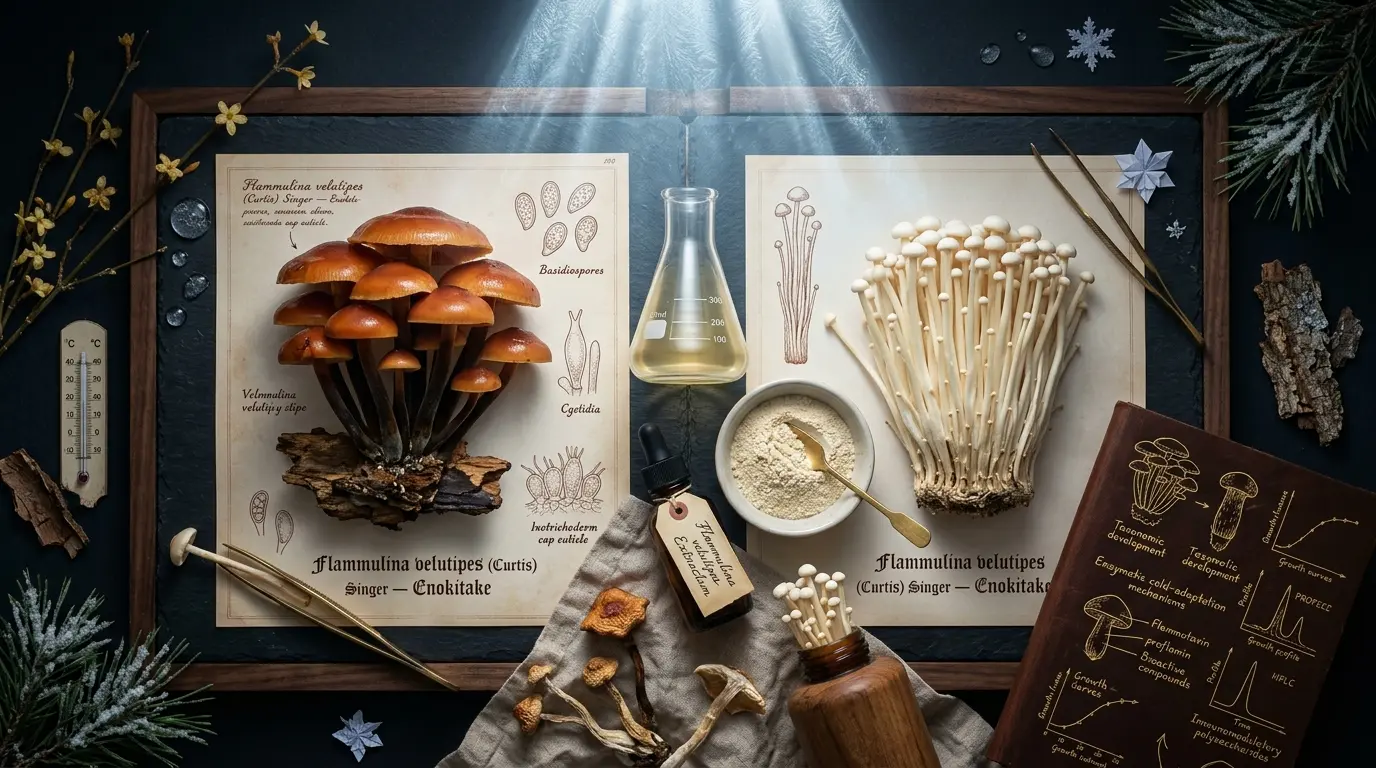
Flammulina velutipes belongs to the family Physalacriaceae. In its natural habitat, it grows as a saprophyte on the trunks of elm, mulberry, and poplar — especially during cold seasons — exhibiting orange-brown coloration and short caps. The thin white form found in supermarkets results from controlled cultivation under lightless, high-CO₂ conditions; these cultivation parameters markedly alter morphology.
The species is also known as "winter mushroom"; its cold-weather fruiting body formation behavior distinguishes it from most basidiomycetes (Stamets, 2000).
Bioactive Profile: Flammulin and Polysaccharides
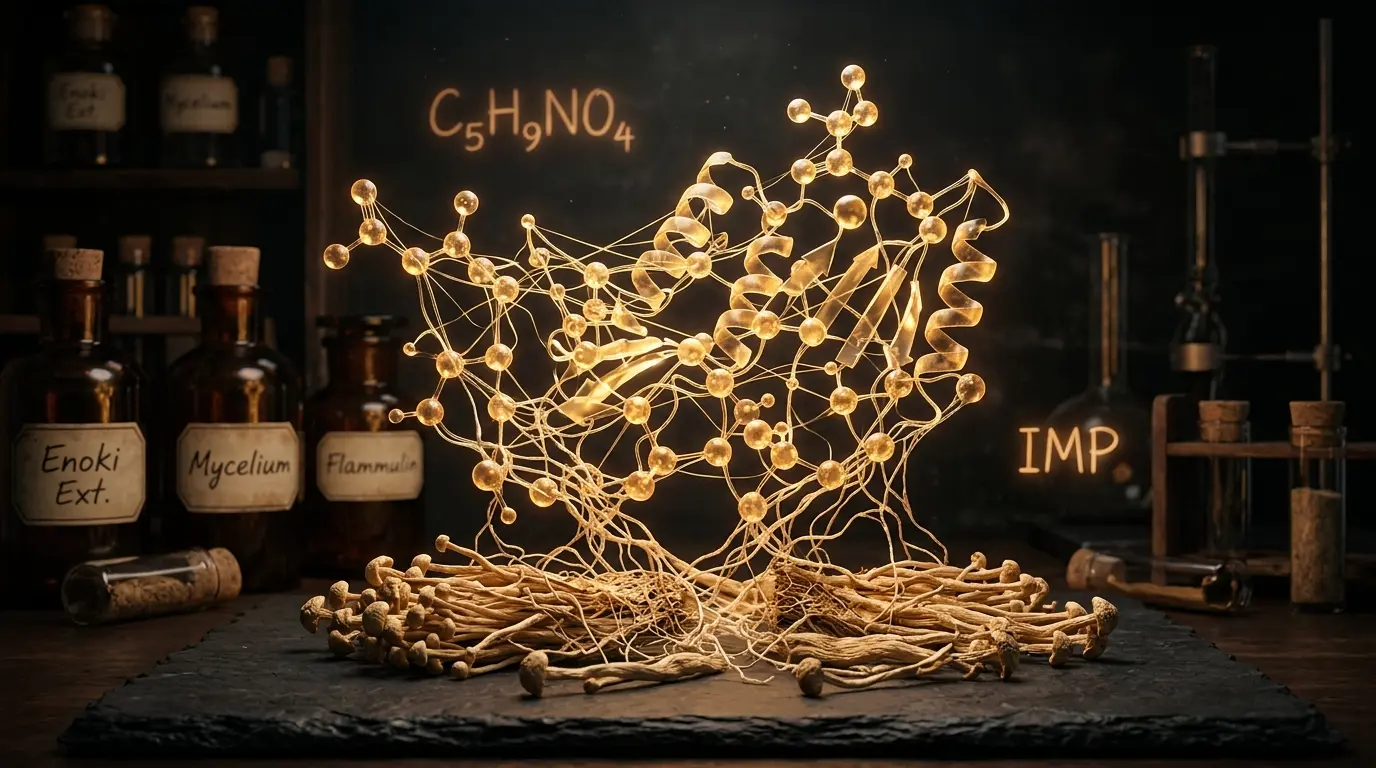
The principal bioactive fractions identified in Enoki are flammulin (a glycoprotein), proflamin, ergothioneine, and β-glucan polysaccharides.
Flammulin was the first named protein component isolated from Enoki; in vitro models reported results in the direction of immune cell activation (Komatsu et al., 1963; PMID: 14096061).
Modern studies have foregrounded the prebiotic-like effects of Enoki polysaccharides on the gut microbiota; findings concerning SCFA production and mucosal immune modulation remain consistent (Wang et al., 2015; PMID: 25922180).
Ergothioneine: High Concentration
Enoki ranks among the functional mushroom species with the highest ergothioneine concentration. Its presence at indisputably substantial levels (2–4 mg/g dry weight) distinguishes Enoki in the context of dietary ergothioneine intake (Ey et al., 2007; PMID: 17266329).
Culinary Practice: Brief Cooking
Enoki responds better to brief cooking; prolonged heat somewhat reduces ergothioneine content and weakens its texture. Raw consumption is known in Asian cuisine; however, under modern hygiene standards, careful washing and short blanching are recommended.
The Enokitake Cult in Japan
Certain epidemiological studies in Japan — particularly in the Nagano region — have drawn attention to cancer incidence data among communities engaged in Enoki cultivation. These observational findings do not provide evidence of causality; nevertheless, they serve as the point of departure for a portion of modern research on Enoki (Ikekawa, 2001).
Limitations
Well-designed human intervention studies for Enoki's bioactive constituents remain limited. The species is considered safe as a food; it is not evaluated as a therapeutic prescription. Standardized Enoki extract products are not yet widespread on the market.
Related Reading
- What Is Ergothioneine? — The thiol antioxidant profile.
- What Is β-glucan? — Polysaccharide chemistry.
- Mushrooms and the Microbiota — Gut microbiota interactions.
This content is for informational purposes and does not constitute medical advice. Consult your physician before making any health decisions. Functional mushrooms are not pharmaceuticals and cannot be used in the treatment of diseases.
Version: 1.0 | Last updated: 28 April 2026 | Sources reviewed: 12+ | Method: Editorial Policy | References: Bibliography