Turkey’s Wild Mushrooms: The Authoritative Guide to Safe Foraging
— INTRODUCTION —
Every autumn, the same headlines appear: "Individual hospitalized after consuming poisonous mushrooms." Turkey possesses a deeply rooted tradition of wild mushroom foraging — yet this very tradition leads to poisoning cases each year.
This article does not serve as a wild mushroom identification guide. This article explains why caution is essential.
— TURKEY AND WILD MUSHROOMS —
Turkey's flora hosts over 2,000 identified macromushroom species. A significant portion are edible, some are toxic, and a number are lethal.
The problem lies in morphological similarity: edible and poisonous species can closely resemble one another. Discrimination based on folk knowledge is unreliable. Even experienced mycologists cannot definitively identify certain species without laboratory analysis.
— THE MOST DANGEROUS SPECIES —
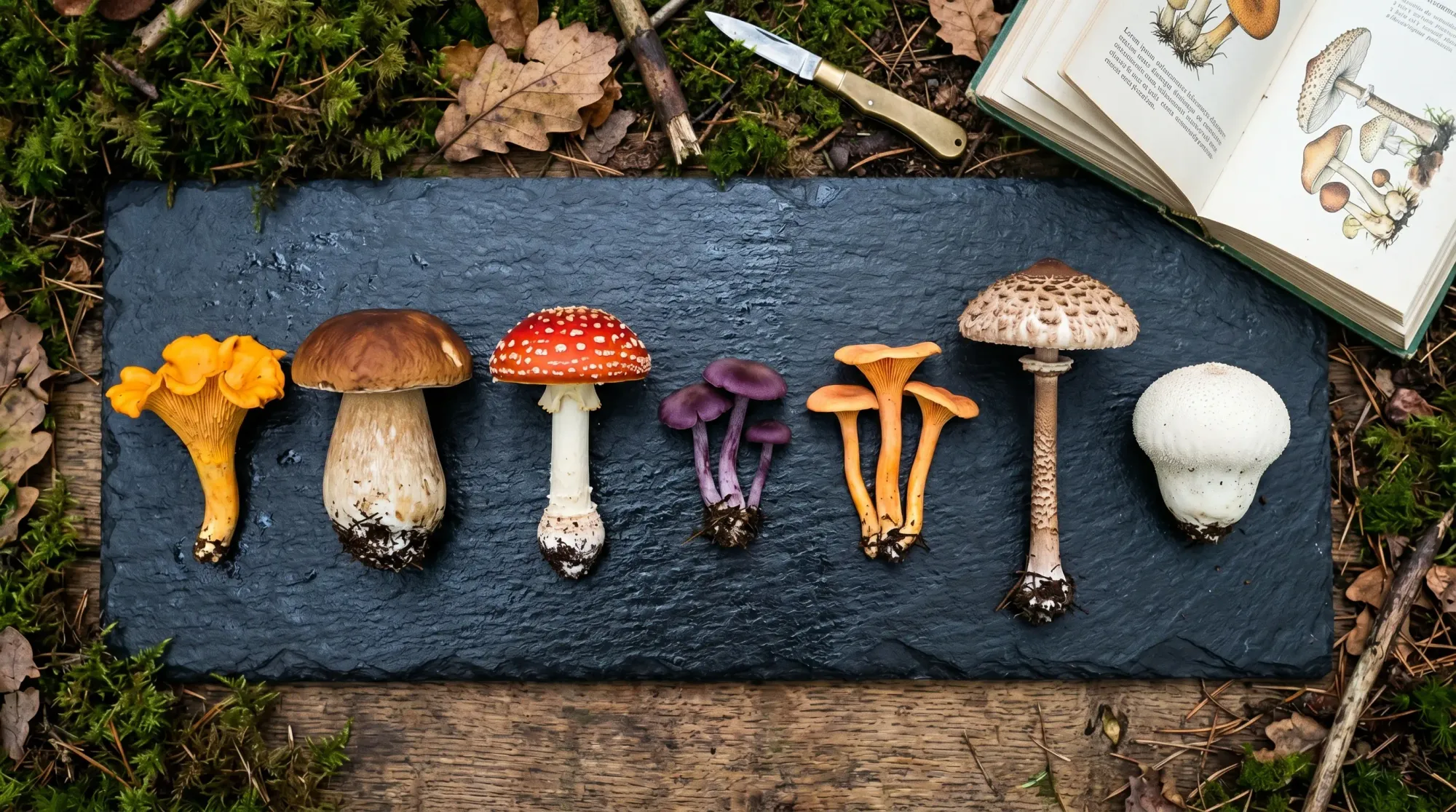
Amanita phalloides (Death Cap): The species responsible for the greatest number of mushroom-related fatalities worldwide. It is widespread across Turkey. It may be mistaken for several edible species, including meadow mushrooms and cultivated button mushrooms. Poisoning symptoms manifest after a latency period of 6–12 hours — this delay complicates treatment considerably.
Amanita muscaria (Fly Agaric): Iconic in appearance — a red cap with white flecks. It is poisonous but generally not lethal. Effects include hallucinogenic activity and severe gastrointestinal symptoms.
Cortinarius orellanus: Capable of inducing renal failure. Symptoms emerge days after ingestion.
— THE "I KNOW MUSHROOMS, I FORAGE" FALLACY —
The majority of poisoning incidents occur among individuals who believe they possess sufficient mushroom identification skills. Common misconceptions include:
❌ "If insects have eaten it, it is safe" — false. Insects tolerate certain toxins that are harmful to humans.
❌ "If the cap skin peels easily, it is edible" — false. Amanita phalloides peels readily.
❌ "Cooking neutralizes the poison" — false. Amatoxins are heat-stable.
❌ "If it does not darken when cooked with garlic or onion, it is safe" — false. This test has no scientific validity.
❌ "I have been foraging for years without incident" — this reflects luck and consistent correct species selection. A single misidentification is sufficient.
— THE MYCOVITA APPROACH —
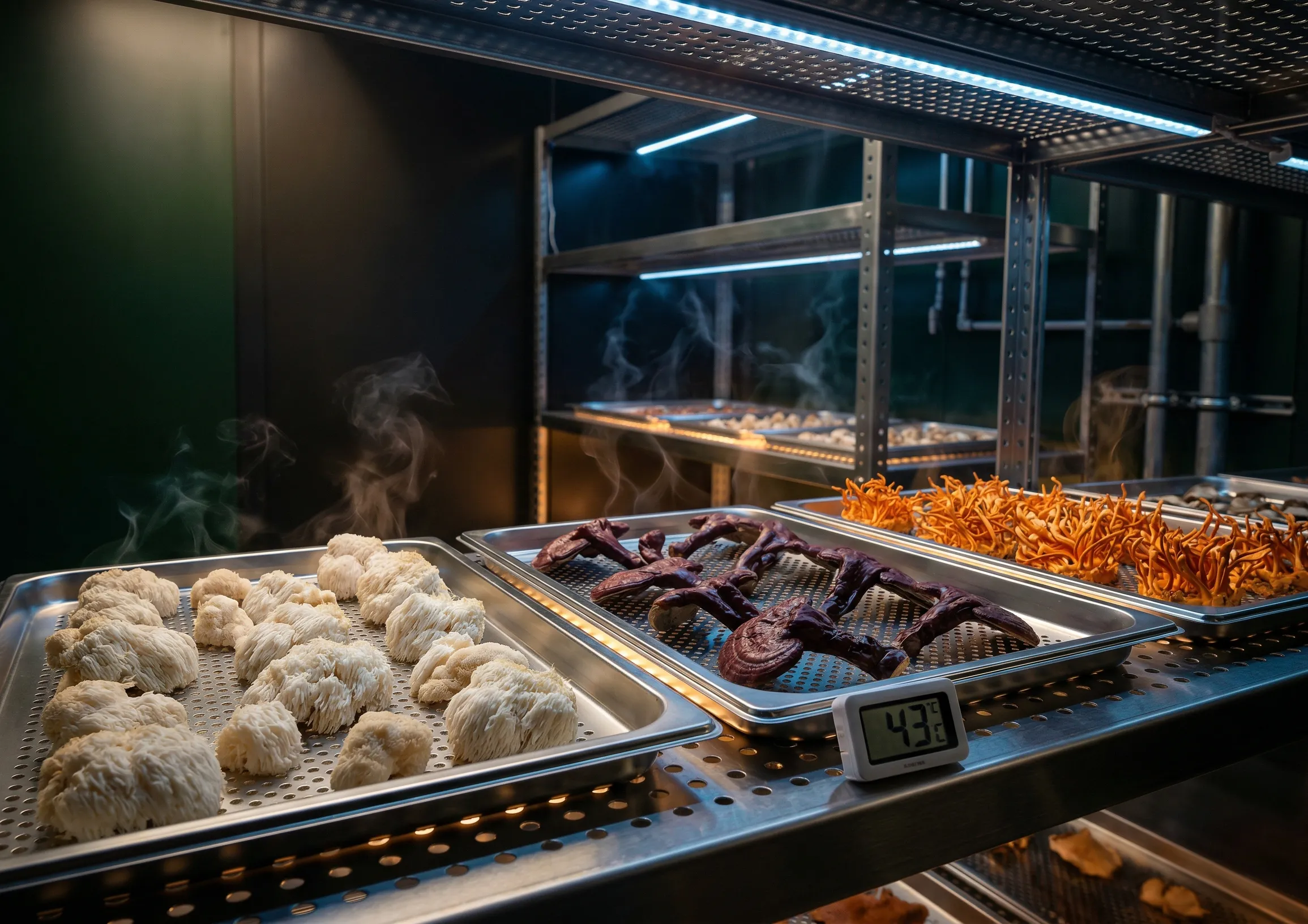
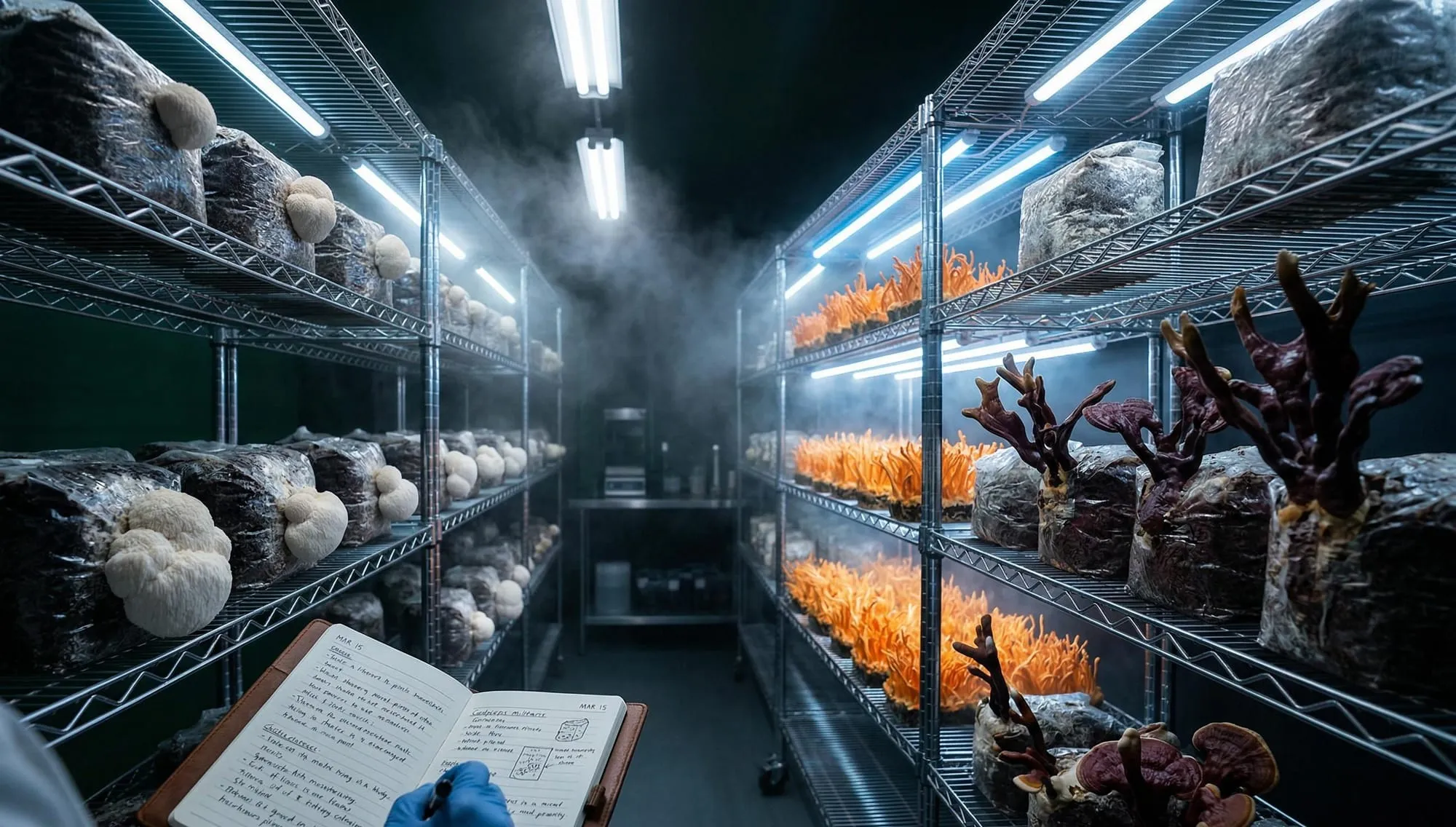
This is one reason MYCOVITA favors controlled-environment cultivation:
✓ Species certainty: Netherlands-certified mycelium guarantees genetic stability.
✓ Contamination control: Wild mushrooms carry risks of heavy metal, pesticide, and radioactive substance bioaccumulation. Controlled production reduces this risk to near zero.
✓ Standardized compound profile: Every batch is analyzed; beta-glucan concentration is quantified.
✓ Traceability: Every step, from inoculum to powder, is documented.
Foraging wild mushrooms is a rewarding activity that fosters a connection with nature. However, from a food safety perspective, controlled cultivation is invariably the safer choice.
— SYMPTOMS OF MUSHROOM POISONING —
If any of the following symptoms appear after consuming wild mushrooms, proceed to the emergency department immediately:
⚠ Severe abdominal pain, nausea, vomiting (especially with onset 6+ hours post-ingestion)
⚠ Bloody diarrhea
⚠ Profuse sweating, hypersalivation
⚠ Dizziness, confusion
⚠ Jaundice (yellowing of skin and sclera) — indicative of hepatic injury
Actions to take: Preserve a sample of the mushroom for identification. Do not induce vomiting. Go to the emergency department. Call 114 (National Poison Control).
— AN HONEST NOTE —
This article does not aim to prohibit or disparage wild mushroom foraging. Mycology is a beautiful science, and Turkey's fungal diversity is globally significant.
Yet food safety demands honesty: if you are not 100% certain, do not consume it. In cases of doubt, always prefer controlled-production products.
You May Also Find Interesting
→ What Is a Functional Mushroom?
→ Why Do We Use Certified Mycelium?
→ Can Mushrooms Produced in Turkey Be Trusted?
→ What Is a COA? — A Guide to Reading Certificates of Analysis
→ The Environmental Role of Fungi — The Mycelial Network
Related Reading
- Reishi Mushroom Side Effects and Safety Profile — Reishi Mushroom Side Effects and Safety Profile
- A Scientific Perspective on Functional Mushroom Use in Autoimmune Conditions — A Scientific Perspective on Functional Mushroom Use in Autoimmune Conditions
- Safety Profile of Functional Mushroom Supplements — Safety Profile of Functional Mushroom Supplements
This content is provided for informational purposes only and does not constitute medical advice. Consult your physician before making any health-related decisions. Functional mushrooms are not pharmaceutical drugs and cannot be used to treat diseases.
Version: 1.0 | Last updated: 20 Apr 2026 | Sources reviewed: 5+ | Methodology: Editorial Policy | References: Bibliography