The Culinary Versatility of King Oyster Mushrooms and the Scallop Technique
— THE TRAP —
You placed the mushroom in the pan. It released its water. It effectively steamed.
That is no longer King Oyster — that is a technique failure.
The King Oyster mushroom (Pleurotus eryngii) possesses a thick, meaty stem with a distinctive structural profile: high moisture content, dense cell walls, and low surface area. At the wrong temperature, this structure sheds water rapidly. At the correct temperature, it undergoes the Maillard reaction — a transformative browning process that produces complex aromas and a firm, layered texture.
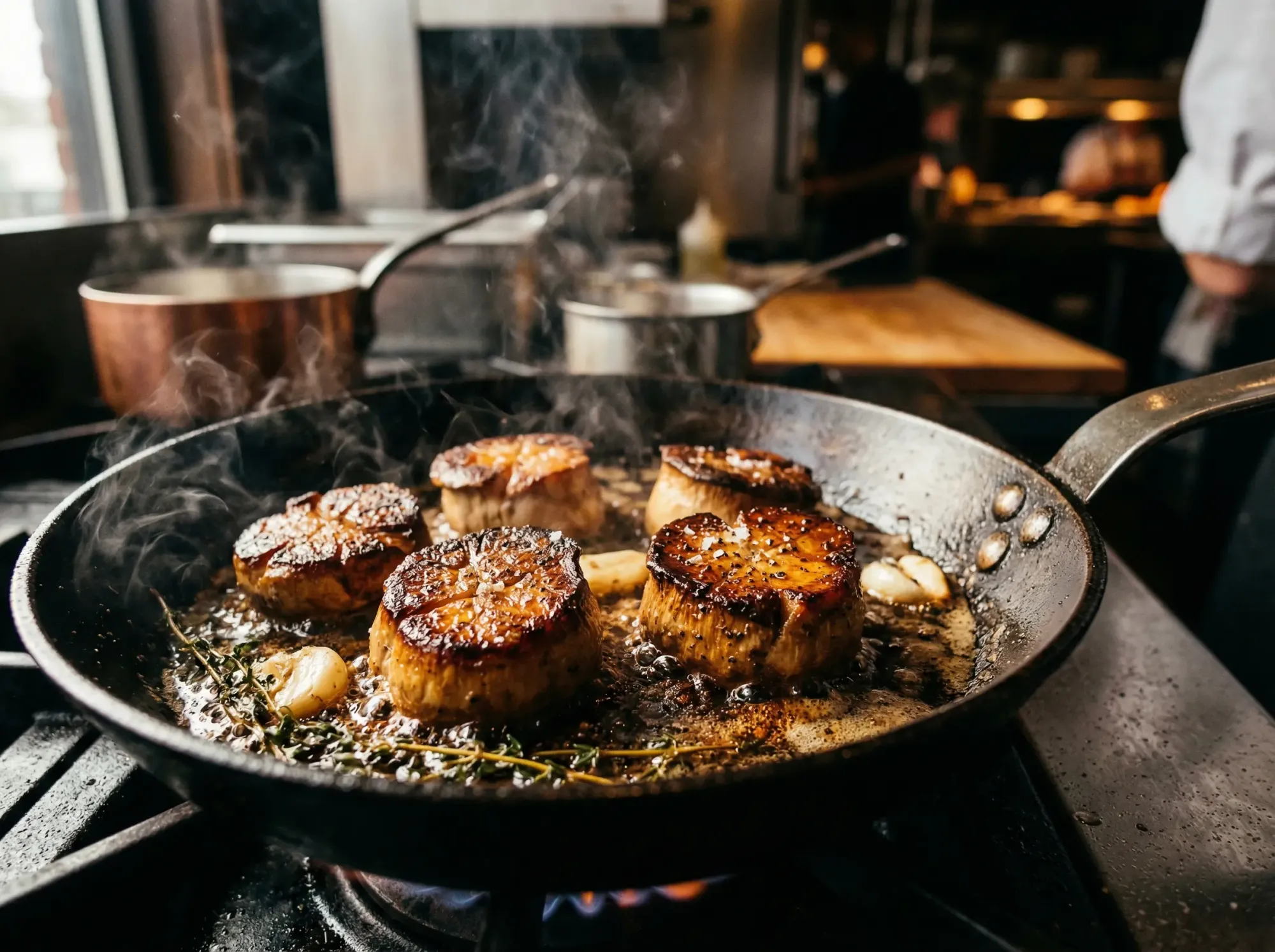
When you reach the Maillard threshold, you achieve a genuine scallop texture: a seared, caramelized exterior enveloping a tender interior, with a caramel-umami fragrance. No seafood required.
Technique is everything. Here is how it works.
— HISTORICAL CONTEXT —
Korea. Late Joseon period. The palace culinary records — Eumsik dimibang — make reference to Pleurotus eryngii cooked over dry heat as a meat substitute. These are among the era's surviving gastronomic manuscripts.
The aim was not for the mushroom to mimic meat but to reveal its own intrinsic texture. A much older idea than most Western kitchens acknowledge.
Western cuisine encountered King Oyster along a different path. During the 1990s, Italian kitchens adopted Pleurotus eryngii as a natural stand-in for Boletus species when porcini were scarce or out of season. Over time, the mushroom earned recognition on its own merits.
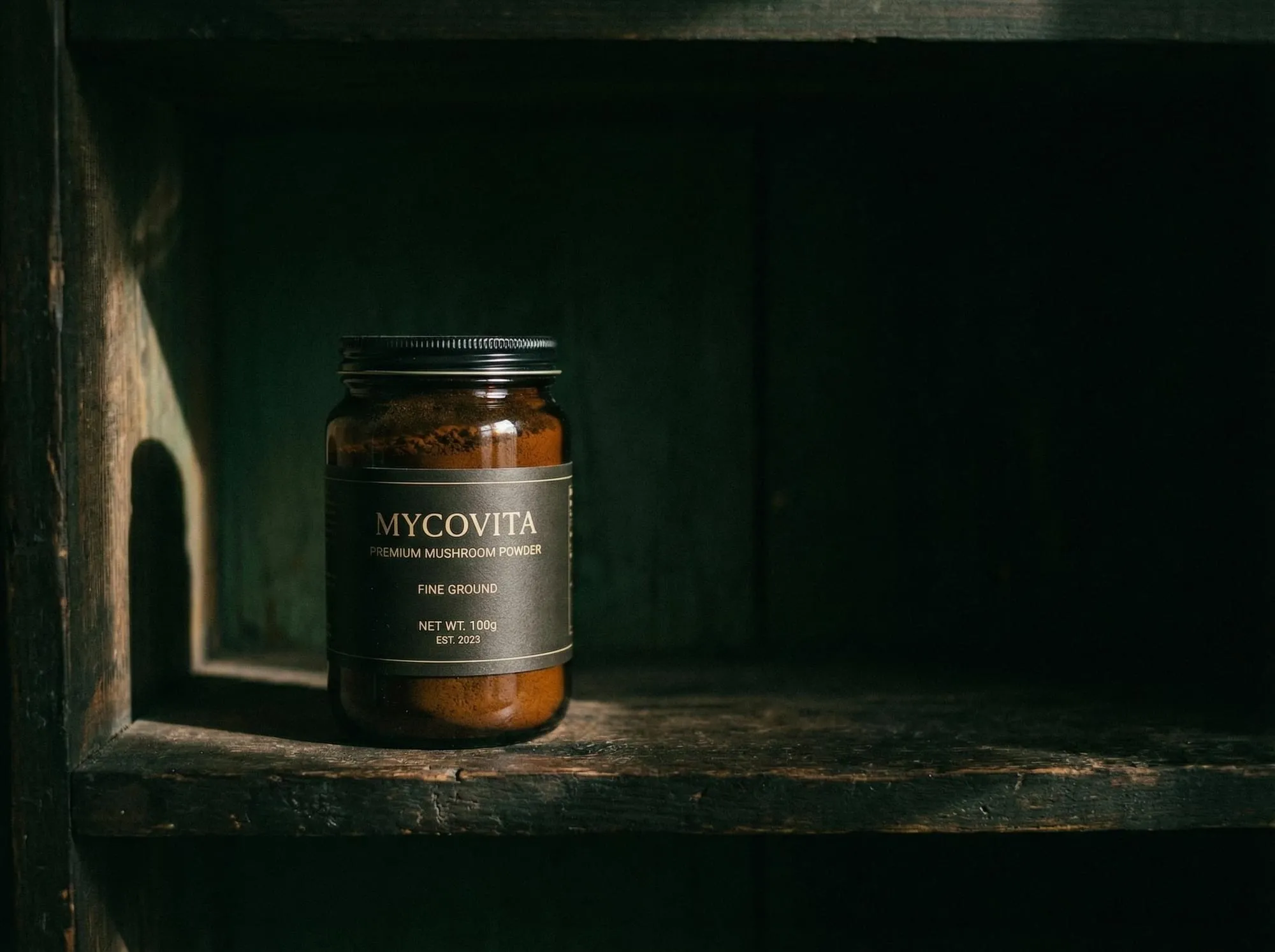
Today, the King Oyster we offer as MYCOVITA Gastronomy No.01 undergoes low-temperature dehydration at 42–45°C, a process that preserves the full structural integrity and umami profile upon reconstitution.
— THE MAILLARD REACTION AND KING OYSTER —
The Maillard reaction is a chemical transformation between proteins and reducing sugars at elevated temperatures. The outcome: browning, deep aroma development, and textural evolution.
For the reaction to proceed, the surface must be dry and the temperature must exceed 150°C. Any residual surface moisture consumes thermal energy for evaporation, preventing the surface from reaching the necessary threshold.
King Oyster's naturally high moisture content poses a direct obstacle. The solution is a two-stage approach:
Stage 1 — Surface Drying: After reconstitution, pat the mushroom thoroughly with kitchen paper until the surface carries no residual moisture. Air-drying for 15–20 minutes at room temperature yields even better results.
Stage 2 — High Heat: Use a cast-iron or heavy-bottomed steel pan. Heat over medium-high until a drop of water beads and dances across the surface before evaporating. Add oil. Add the mushroom. Do not touch it.
— THE SCALLOP TECHNIQUE —
Preparing dehydrated King Oyster in scallop format:
Reconstitution: Immerse in warm water at 60°C for 10 minutes. Cold water rehydrates too slowly; excessively hot water compromises textural integrity. Reserve the soaking liquid — it forms an excellent stock base.
Shaping: Slice the stem crosswise into medallions 2.5–3 cm thick. This proportion is ideal for the Maillard reaction: sufficient surface area for browning, yet not so deep that the center remains undercooked.
Searing: Cast-iron pan → high heat → neutral oil (sunflower, avocado) → mushroom face down → leave undisturbed for 3–4 minutes. Lift and inspect — the underside should display a deep brown crust. Flip → 2 minutes. During the final 30 seconds, add butter, fresh thyme, and garlic, and baste continuously.
Salt: apply only at the moment of service. Salting the mushroom too early triggers osmosis, drawing moisture to the surface and sabotaging the Maillard reaction.
Serving: Present as you would a scallop — atop a sauce. Pea purée, cauliflower purée, or a butter-based emulsion. Garnish with microgreens.
— THE STEAK TECHNIQUE —
Slice the stem longitudinally into planks approximately 1 cm thick. Sear over high heat on both sides. Butter, garlic, and rosemary form the basting trio. The process mirrors a classic steak preparation — adapted entirely for mushroom tissue.
Recommended sauce: red wine reduction. The earthy-umami notes of King Oyster pair exceptionally well with the acidity of reduced red wine.
— RISOTTO APPLICATIONS —
A seared King Oyster scallop atop risotto represents the most classic pairing. But the mushroom also integrates into the risotto itself.
For incorporation into risotto: sear coarsely chopped reconstituted King Oyster separately in a hot pan. Fold it into the risotto only at the final stage. Never cook it within the risotto — the texture will deteriorate.
Add the reserved soaking liquid to the risotto stock. This water contains dissolved glutamate and guanosine monophosphate (GMP), natural flavor enhancers. No separate stock is needed.
— STORAGE —
In dried form, stored cool, dark, and in airtight packaging: 12 months. Reconstituted but unused mushroom: refrigerated for up to 3 days. Do not freeze before cooking — freezing damages the cellular structure and degrades texture irreversibly.
— NOTE FROM THE KITCHEN —
King Oyster exhibits a critical anatomical distinction: the cap is drier than the stem. Treat them separately using different methods:
Cap → low heat, oil, crisp. Can be fried into chips. Dip in egg white blended with Parmesan and bake — mushroom crisps.
Stem → high heat, Maillard, scallop. Never combine the two approaches.
If you cook the entire mushroom using a single method, you will either burn the cap or steam the stem.
Related reading: King Oyster Encyclopedia · What Is Ergothioneine? · The Vegan Protein Plate
MYCOVITA's production philosophy and transparency principles: Why MYCOVITA?
You May Also Find Interesting
→ Can You Trust Mushrooms Produced in Turkey?
→ Functional Mushroom Production in Turkey
→ The Functional Mushroom Market in Turkey
For the biological profile and Ergothioneine content of King Oyster, consult the MADALYON | King Oyster encyclopedia article. For further details on the scallop technique, see our Vegan Protein Plate feature.
This content is provided for informational purposes only and does not constitute medical advice. Consult a qualified healthcare professional before making any health-related decisions. Functional mushrooms are not pharmaceutical drugs and are not intended to treat, cure, or prevent any disease.
Version: 1.0 | Last updated: 20 Apr 2026 | Sources reviewed: 5+ | Method: Editorial Policy | References: Bibliography