The Comprehensive Encyclopedia of Antrodia camphorata (Niu-Chang-Chih)
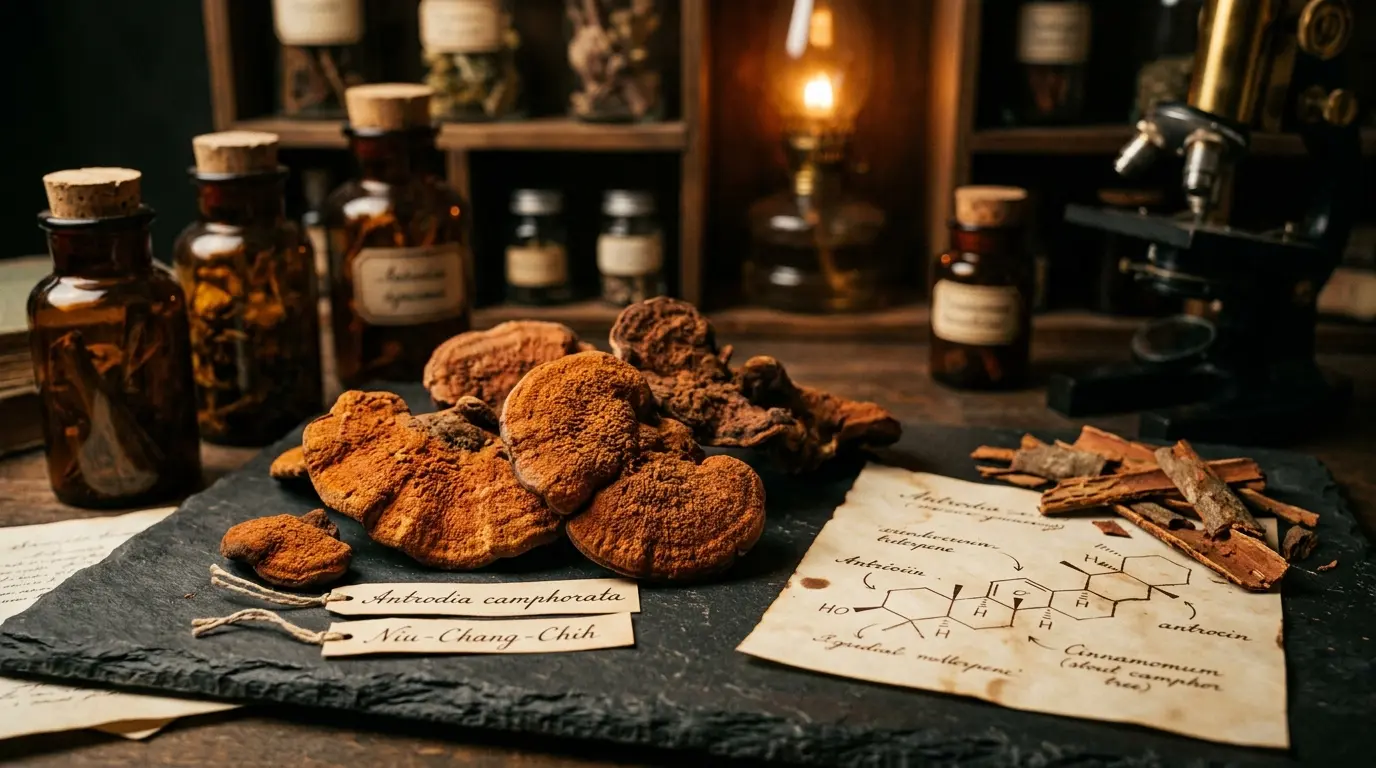
One tree species, on one island, in the entire world: Antrodia camphorata is a parasitic polypore fungus that inhabits the inner heartwood of Cinnamomum kanehirai, an endemic tree of Taiwan. This extreme rarity is what drives its gram-for-gram price to compete with gold.
Scientific Classification and Endemism
Antrodia camphorata is a polypore Basidiomycota species belonging to the family Fomitopsidaceae (classified under Polyporaceae in some taxonomic systems). Because its sole host, Cinnamomum kanehirai, is itself endemic to Taiwan, the two organisms present a compelling case of coevolution.
Wild harvesting at commercial scale is virtually impossible, which has elevated the importance of mycelial culture and substrate fermentation research. Standardization remains challenging, however, because the compositional profile of cultured mycelium diverges from that of the wild-grown fruiting body.
Bioactive Profile
Antrodia camphorata possesses an exceptionally rich bioactive profile:
- Antrodins (A, B, C, D) — maleic and succinic acid derivatives; the principal constituents investigated in hepatoprotective research
- Antrocin — a labdane-type diterpenoid; studied extensively in liver cell models
- Zhankuic acid derivatives — lanostane-type triterpenes
- Ergostane sterols — triterpenoid compounds exhibiting structural similarity to those found in Ganoderma species
- Polysaccharides — beta-glucan and heteropolysaccharide fractions
Hepatoprotective Research
The liver-protective properties of A. camphorata constitute the most extensively investigated subject within the Taiwanese medical literature. Positive outcomes have been reported in the CCl₄ model, ethanol-induced liver injury models, and hepatic fibrosis models.
Proposed mechanistic pathways include Nrf2 activation, NF-κB inhibition, and cytochrome P450 enzyme modulation. The antrodins are considered the primary mediators of these effects (Nakamura et al., 2004; Hsiao et al., 2003).
Research Limitations
The overwhelming majority of studies have been conducted by Taiwanese institutions; independent international replication remains limited. Human clinical trials are few in number and methodologically heterogeneous. The difficulty of procuring standardized raw material complicates both research efforts and product quality assurance.
Further Reading
- Antrodin: The Hepatoprotective Profile of Antrodia camphorata
- Antrocin: The Diterpenoid Constituent of Antrodia camphorata
- Mushrooms and Liver Health: Hepatoprotective Mechanisms
This page has been prepared as part of the MYCOVITA Mycology Library. It serves scientific reference purposes and does not constitute medical advice. Source: mycovita.bio · Content Policy v1.0