Reishi Mushroom: Adverse Effects and Safety Profile
— OVERVIEW —
Reishi is called the “mushroom of immortality.” Yet behind this promise of immortality lies an overlooked truth: every bioactive compound carries a safety profile.
Reishi is generally recognized as safe. Thousands of years of traditional use and the bulk of modern research support this view. But “generally safe” does not mean “trouble‑free for everyone under all circumstances.”
This article will neither exaggerate nor minimize — it will present exactly what the science says.
— SAFETY PROFILE —
Systematic reviews of clinical studies on Ganoderma lucidum consistently rate Reishi’s overall safety profile favourably. At commonly used doses (1.5–9 g/day of powder or equivalent extracts), reports of serious adverse effects are rare.
Rare, however, does not mean zero.
— REPORTED SIDE EFFECTS —
Side effects documented in the clinical literature and case reports include:
Digestive system: Some individuals experience stomach discomfort, nausea, diarrhoea, or abdominal pain. These effects typically appear at high doses or when Reishi is taken on an empty stomach. Taking it with food alleviates them.
Dry mouth and throat irritation: Linked to the bitter taste of triterpenoids and their effect on mucous membranes. Diluting with water or adding honey reduces the discomfort.
Dizziness: Rare but reported. Caution is warranted, especially in those predisposed to low blood pressure.
Hepatotoxicity: Rare case reports exist. Liver toxicity has been associated with prolonged intake of high‑dose powder. Individuals with pre‑existing liver disease should exercise caution.
References: Wanmuang, H. et al. (2007). Journal of the Medical Association of Thailand. Jin, X. et al. (2012). Global Advances in Health and Medicine.
— DRUG INTERACTIONS —
This section is particularly important.
Anticoagulants and antiplatelet drugs (Warfarin, Heparin, Aspirin): In vitro data demonstrate that Reishi exerts antiplatelet and anticoagulant effects. Anyone taking blood thinners should avoid Reishi or must consult their physician. Bleeding risk may be increased.
Antihypertensives (blood pressure medications): Studies indicate that Reishi may lower blood pressure. Individuals on antihypertensive therapy should be alert to the risk of an additional drop.
Immunosuppressants: Medications used after organ transplantation or for autoimmune diseases to suppress the immune system. Reishi’s immunomodulatory action may counteract these drugs. An oncologist or immunologist must be consulted without exception.
Chemotherapy drugs: Potential interactions with certain chemotherapy protocols exist. During cancer treatment, any supplement use must occur under the oncologist’s supervision.
Antidiabetic drugs: Animal studies suggest Reishi can lower blood glucose. Caution is required when combining it with diabetes medications because of the risk of hypoglycemia.
— WHO SHOULD NOT USE REISHI —
❌ Those on blood thinners — never without consulting a physician
❌ Anyone scheduled for surgery — discontinue at least 2 weeks before the operation
❌ Pregnant and breastfeeding women — insufficient safety data
❌ Individuals with severe liver disease — risk of hepatotoxicity
❌ Those with autoimmune conditions — immune modulation requires caution
❌ Organ transplant recipients — risk of interaction with immunosuppressants
❌ Children under 12 years — insufficient clinical safety data
— DOSAGE AND DURATION —
General dosage: 1–2 grams per day (powder form)
Upper limit: The literature reports use up to 9 grams per day, but a daily range of 1–3 grams is recommended for regular intake.
Starting dose: Begin with half the regular dose during the first week (0.5–1 gram). Assess tolerance.
Duration: Use for 8–12 weeks, then take a break of 2–4 weeks before resuming. Indefinite, uninterrupted use is not recommended.
Timing: Take with dinner or 60–90 minutes before bedtime. Avoid use on an empty stomach.
— THE ANTLER FORM DIFFERENCE —
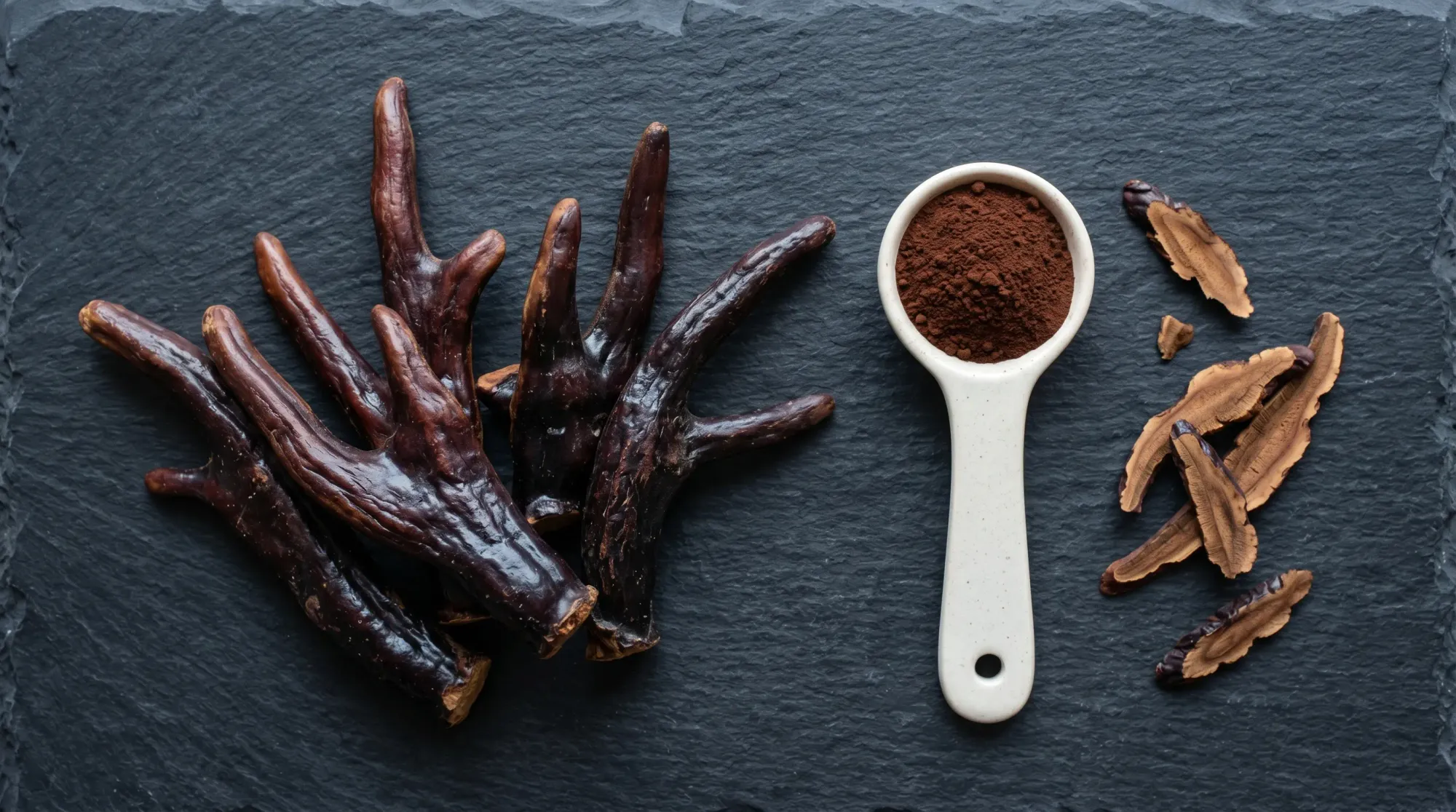
The MYCOVITA Reishi Antler (Black Horn) form differs from standard Reishi. Cultivated in a CO₂‑controlled environment, the Antler form exhibits a higher triterpenoid concentration.
This means: more bioactive compounds per gram. As a result, dose precision becomes even more critical. One gram of the Antler form can deliver a triterpenoid profile equivalent to 1.5–2 grams of standard Reishi.
This is an advantage, but it also demands careful dosing.
— HONEST ASSESSMENT —
Reishi has been used for thousands of years, and the vast majority of modern research supports its safety profile. However:
✓ Anyone taking medication must consult a physician.
✓ Caution is required in those with liver disease.
✓ Combined use with blood thinners is risky.
✓ Should not be used during pregnancy and breastfeeding.
✓ Continuous, indefinite use is not recommended — cyclical use is ideal.
✓ The starting dose should be kept low, and tolerance should be monitored.
A brand that provides this information is a trustworthy brand. One that avoids it, is not.
— SCIENTIFIC REFERENCES —
Wanmuang, H. et al. (2007). Fatal fulminant hepatitis associated with Ganoderma lucidum (Lingzhi) mushroom powder. Journal of the Medical Association of Thailand, 90(1).
Jin, X. et al. (2012). Ganoderma lucidum (Reishi mushroom) for cancer treatment. Cochrane Database of Systematic Reviews.
Klupp, N.L. et al. (2015). Ganoderma lucidum mushroom for the treatment of cardiovascular risk factors. Cochrane Database of Systematic Reviews.
Wachtel-Galor, S. et al. (2011). Ganoderma lucidum (Lingzhi or Reishi): A Medicinal Mushroom. Herbal Medicine: Biomolecular and Clinical Aspects, 2nd edition.
You May Also Like
→ DENGE | Reishi Black Horn — Species Encyclopedia
→ How Does Reishi Affect Sleep Quality?
→ What Are Triterpenes? — Reishi’s Bitter Power
→ Does Lion’s Mane Have Side Effects?
→ Are Mushroom Supplements Safe?
Further Reading
- Side Effects and Safety Profile of Lion’s Mane Mushroom — Side Effects and Safety Profile of Lion’s Mane Mushroom
- Side Effects and Safety Profile of Cordyceps Mushroom — Side Effects and Safety Profile of Cordyceps Mushroom
- Functional Mushrooms and Drug Interactions Safety Guide — Functional Mushrooms and Drug Interactions Safety Guide
This content is for informational purposes only and does not constitute medical advice. Consult your physician before making any health decisions. Functional mushrooms are not drugs and cannot be used to treat diseases.
Version: 1.0 | Last updated: 20 Apr 2026 | Number of sources reviewed: 7+ | Methodology: Editorial Policy | References: Bibliography